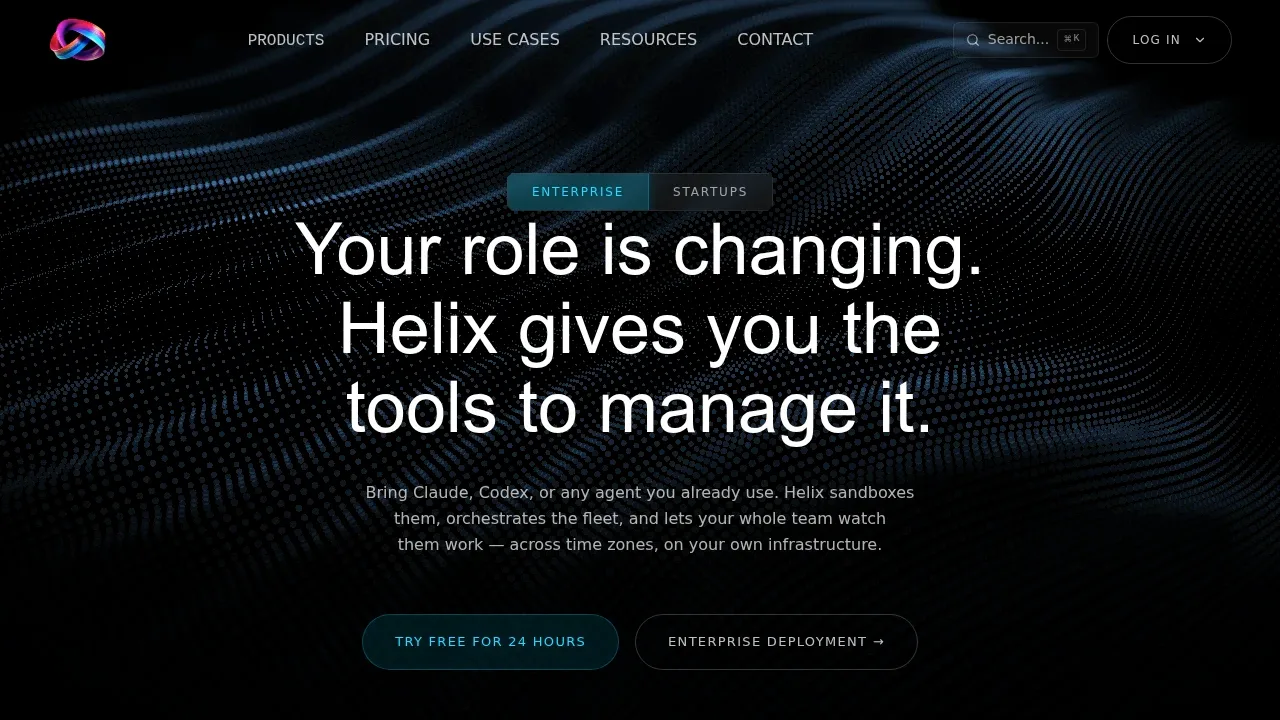
Helix is a paid, self-hosted platform for engineering teams running coding agents in parallel. Each task gets an isolated Linux desktop with an editor, browser and terminal, so agents can build and test applications while teammates watch or take control through their browsers.
A shared Kanban board organizes work around specifications, with human review before implementation and pull request approval before merge. Chat history and running environments persist across team handoffs. Developers can inspect files, use the agent's terminals and pair program in the same workspace.
Helix works with Claude Code, OpenAI Codex, Gemini CLI, Qwen Code, Goose, Zed Agent and other ACP-compatible agents. You can change the agent or model during a task while keeping its conversation and uncommitted work. It connects to existing Claude or ChatGPT subscriptions, provider API keys and OpenAI-compatible endpoints.
The platform runs on macOS, Linux or Kubernetes. With local models through Ollama or vLLM, inference can stay on your hardware, including in air-gapped deployments. The Mac offering supports fully offline use with local models and at least 64 GB of unified memory. Credentials and development data stay on the host machine; choosing a cloud model provider sends inference requests to that service. Managed Helix Cloud hosts the agent infrastructure instead.
Team controls include role-based access, SSO, temporary task credentials, audit logs and usage tracking. Kodit provides code indexing and context across repositories, while the wider platform includes document retrieval, vision RAG and MCP tool support.
Claim this page with an email at helix.ml. Helix gets the verified badge, and you can upgrade the listing to be featured on localhosted. Proud to be listed? Put our badge on your site.
Want more people to find Helix?Promote it
Something wrong or outdated on this page?
9.5KUpdated 6 hours agoApache-2.0
Docker · Web#Guardrails#MCP#Tool calling
Higress is a self-hosted AI gateway for developers and teams managing model APIs and the tools their AI agents call. It puts LLM traffic and MCP servers behind a shared entry point, with authentication, traffic controls and monitoring. The open-source edition uses the Apache 2.0 license and runs locally in Docker without registration. Alibaba Cloud also offers a fully managed gateway.
44.2KUpdated 3 days agoApache-2.0
#MCP
1.2KUpdated 2 days agoMIT
macOS · Windows · Linux · Docker · Web#Guardrails#llama.cpp backend#LLM tracing
294Updated 4 hours ago
macOS · Windows · Linux · Web#Agent Skills#Batch processing#Code execution
Ringer runs parallel AI coding agents on your machine and checks their output by executing tests or other validation commands. It's for developers who want to delegate implementation while keeping planning and review with a stronger model. The aim is to reduce model spending on routine coding work without relying on workers' claims that they're finished.
13.7KUpdated 8 hours agoApache-2.0
macOS · Windows · Linux · Docker#Agent Skills#Code execution#Guardrails
OpenShell is a self-hosted runtime for teams running autonomous AI agents that need access to files, APIs and credentials. It runs agents in sandboxes with kernel-level isolation and explicit access policies. It's open source under Apache 2.0 and supports Linux and macOS on Apple Silicon, with Docker, Podman or host virtualization.
42.5KUpdated 12 hours agoApache-2.0
Docker · Web#Guardrails#Human approval#LLM tracing
Kong Gateway puts API, LLM and MCP traffic behind a shared gateway on your own infrastructure. It's for platform teams that need consistent access controls and traffic policies across services and AI applications. The open-source gateway uses the Apache 2.0 license and runs natively on Kubernetes through Kong's official Ingress Controller.
GoModel is a self-hosted AI gateway for developers and platform teams that want one API for local models and cloud providers. It accepts OpenAI- and Anthropic-compatible requests, so applications can keep their existing SDKs while the gateway handles provider selection and usage controls.
Agno is a Python framework and runtime for developers building customer-facing or internal AI agents. You can run its agent platform locally with Docker, on your own servers or in your cloud. The open-source framework uses the Apache 2.0 license, and the platform keeps sessions, memory, knowledge and traces in your database.