
ToolHive
A self-hosted MCP platform runs servers locally or on Kubernetes, with container isolation and connections to Claude Code, Cursor and GitHub Copilot.
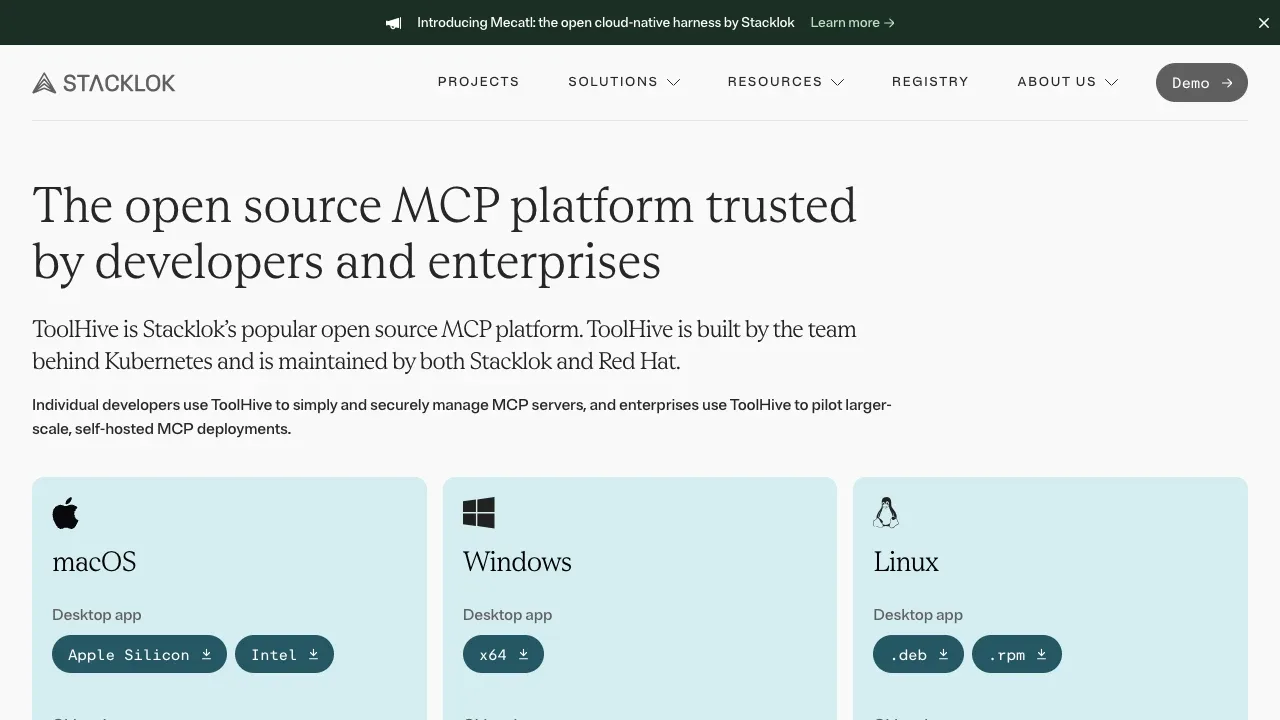
ToolHive runs and manages Model Context Protocol (MCP) servers for developers and platform teams that want control over the tools their AI clients can access. It supports individual desktop use and shared deployments on your own infrastructure.
- Isolated execution: Run MCP servers in containers with restricted permissions, encrypted secrets and network isolation controls.
- AI client connections: Connect managed servers to Claude Code, Claude Desktop, Cursor, GitHub Copilot and VS Code through a desktop app or CLI.
- Shared server catalog: Curate servers from the official MCP registry or your own catalog, group them by role or use case, and preset their permissions and configuration.
- Access controls and auditing: Apply authentication and access policies through a gateway, integrate OIDC/OAuth identity providers for SSO, and collect audit logs, OpenTelemetry traces and Prometheus metrics.
- Tool selection: Use semantic tool search and filter tool descriptions to reduce token usage, or combine multiple tools into workflows behind a virtual MCP endpoint.
ToolHive is open source under the Apache License 2.0. Local deployments use Docker or Podman; a Kubernetes operator manages servers and registries on shared infrastructure. You can self-host the registry, gateway and runtime, while connections to external MCP services still use those providers. Identity enforcement requires a configured authentication source.
 Logotyper


