
PentAGI
A self-hosted AI penetration testing system runs security tools in Docker sandboxes and works with local models or cloud providers.
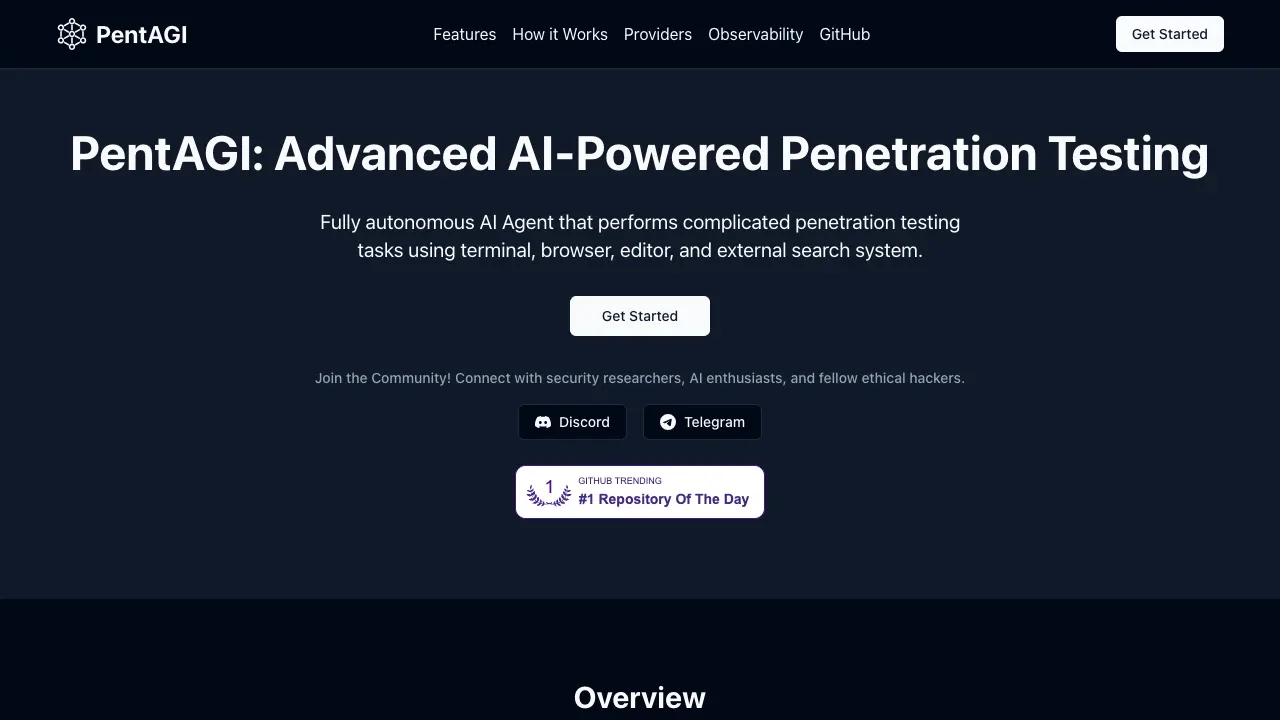
PentAGI automates authorized penetration testing for security engineers, researchers and red teams. Its specialized AI agents turn a target and a plain-language goal into testing work you can follow through a web interface.
- Autonomous testing. Agents divide research and execution tasks, then run tools including nmap, Metasploit and sqlmap in isolated Docker sandboxes.
- Reusable findings. The system retains commands, outputs and successful approaches for later tests; an optional Graphiti and Neo4j knowledge graph connects hosts, services and findings.
- Vulnerability reports. Reports include findings and exploitation guidance, with browser viewing and downloads in Markdown or PDF.
- Web research. A built-in browser gathers information from websites, while integrations such as SearXNG, Tavily and Sploitus support external searches.
- Automation and visibility. REST and GraphQL APIs connect testing to other workflows, and Grafana and Prometheus integrations support monitoring.
PentAGI is open source under the MIT license and runs on your own infrastructure through Docker Compose on Linux, macOS and Windows. It supports local inference through Ollama or vLLM, custom OpenAI-compatible endpoints, and cloud providers including OpenAI, Anthropic, Gemini and AWS Bedrock. Test records stay in your self-hosted database; choosing a cloud model sends model requests to that provider, and external web searches need network access.
It supports autonomous and assistant-guided testing. It doesn't provide predefined adversary-emulation campaigns or CALDERA-style breach and attack simulation.
 Logotyper


