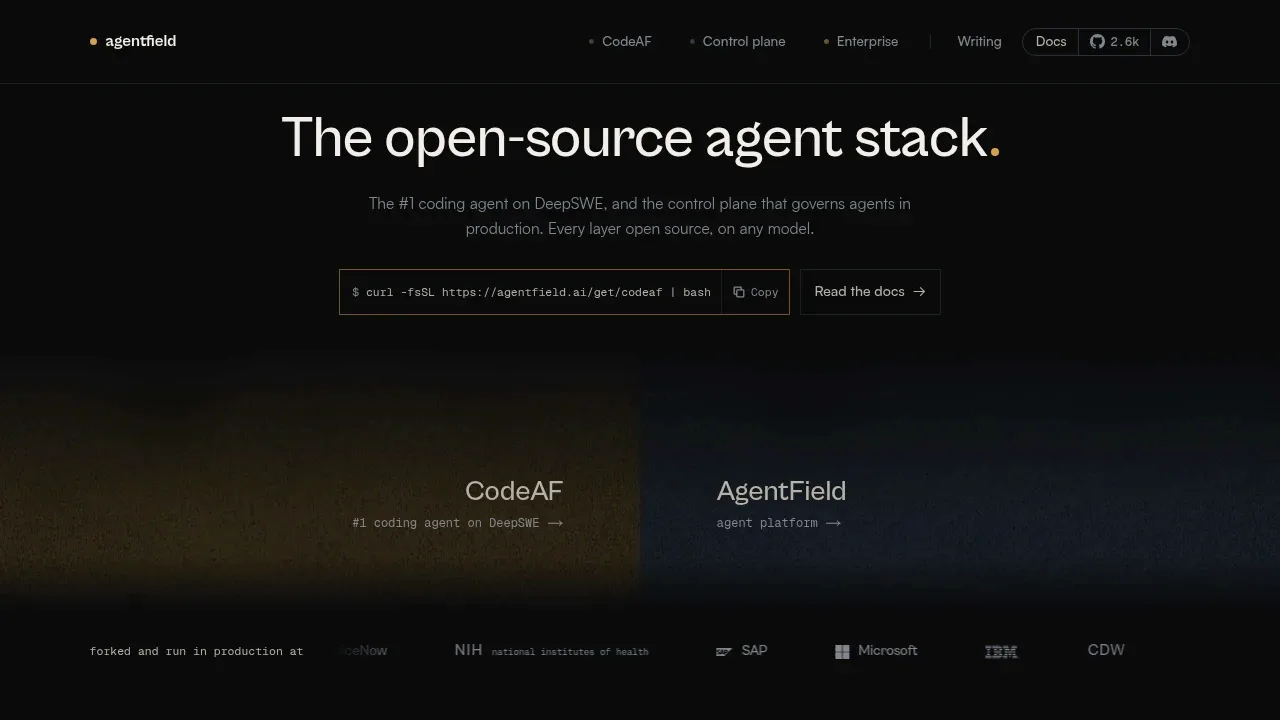
AgentField is a self-hosted, open source platform for developers building AI agents that need to work together under shared access rules. It runs in your own infrastructure and combines agent execution with identity, policy enforcement and audit records. The project uses the Apache 2.0 license.
Agents can use Python, Go or TypeScript functions, with REST endpoints for other applications to call. AgentField supports LLMs through LiteLLM and returns structured output using Pydantic or Zod schemas. Agents can discover each other's capabilities and make traced calls across the system. Built-in memory handles key-value storage and vector search without requiring Redis.
For long tasks, the platform provides asynchronous execution, streaming, retries and progress updates. Human approval can pause a workflow and resume it later, with state that survives agent restarts. Teams can compare agent versions through A/B testing and gradually shift traffic between deployments. Workflow graphs, execution timelines and Prometheus metrics help trace failures and inspect agent behavior.
Governance is a central feature: each agent has a cryptographic identity, signed requests authenticate calls between agents, and tag-based policies control which agents can call which capabilities. Execution records include tamper-proof receipts that you can verify offline. AgentField also orchestrates multi-turn coding tasks through its own harness or external tools such as Claude Code, Codex and OpenCode.
Claim this page with an email at agentfield.ai. AgentField gets the verified badge, and you can upgrade the listing to be featured on localhosted. Proud to be listed? Put our badge on your site.
Want more people to find AgentField?Promote it
Something wrong or outdated on this page?
447Updated 4 weeks agoApache-2.0
#Agent Skills#Code execution#Guardrails
Hypha is a local-first TypeScript framework for developers building AI agents that need controlled tool use, recoverable workflows and an audit trail. It separates the agent's reasoning and planning from the execution layer that enforces policies, approvals and workflow boundaries. It's open source under Apache 2.0.
32.6KUpdated 1 day agoApache-2.0
Web#Agent Skills#Code execution#Distributed execution
42.5KUpdated 12 hours agoApache-2.0
Docker · Web#Guardrails#Human approval#LLM tracing
201Updated 3 months agoMIT
macOS · Linux#Distributed execution#Guardrails#Human approval
483Updated 2 months agoMIT
macOS · Web#Guardrails#LLM tracing#Multi-agent workflows
409Updated 1 day agoApache-2.0
#Code execution#Guardrails#Human approval
AgentScope is an open source Python framework for developers building AI agent applications on their own servers. It combines an agent SDK with a FastAPI backend and web UI, including support for separate users and sessions and distributed deployment. Its Apache 2.0 license allows use and modification.
Agno is a Python framework and runtime for developers building customer-facing or internal AI agents. You can run its agent platform locally with Docker, on your own servers or in your cloud. The open-source framework uses the Apache 2.0 license, and the platform keeps sessions, memory, knowledge and traces in your database.
claudectl is a local dashboard and supervisor for developers running several Claude Code agents on macOS or Linux. It brings session activity, approvals and spending into one terminal view, with an optional local LLM that makes decisions based on your preferences. It's open source under the MIT license.
HarnessX is a self-hosted Python framework for developers and researchers building AI agents for coding, research, or assistant tasks. It separates model selection from agent behavior, so you can change memory, tools, or safety checks without rewriting the agent. It's open source under MIT.
MartinLoop is a free, self-hosted runtime for developers and engineering teams delegating software work to AI coding agents. It wraps Claude Code, Codex CLI and Gemini CLI with limits and checks that sit outside the agent. The agent writes the code; MartinLoop decides when work can continue and when the result passes the configured checks.