
Jupyter AI
An open source JupyterLab extension connects AI agents to notebooks, with shared chats, notebook editing, and approval controls under the BSD-3-Clause license.
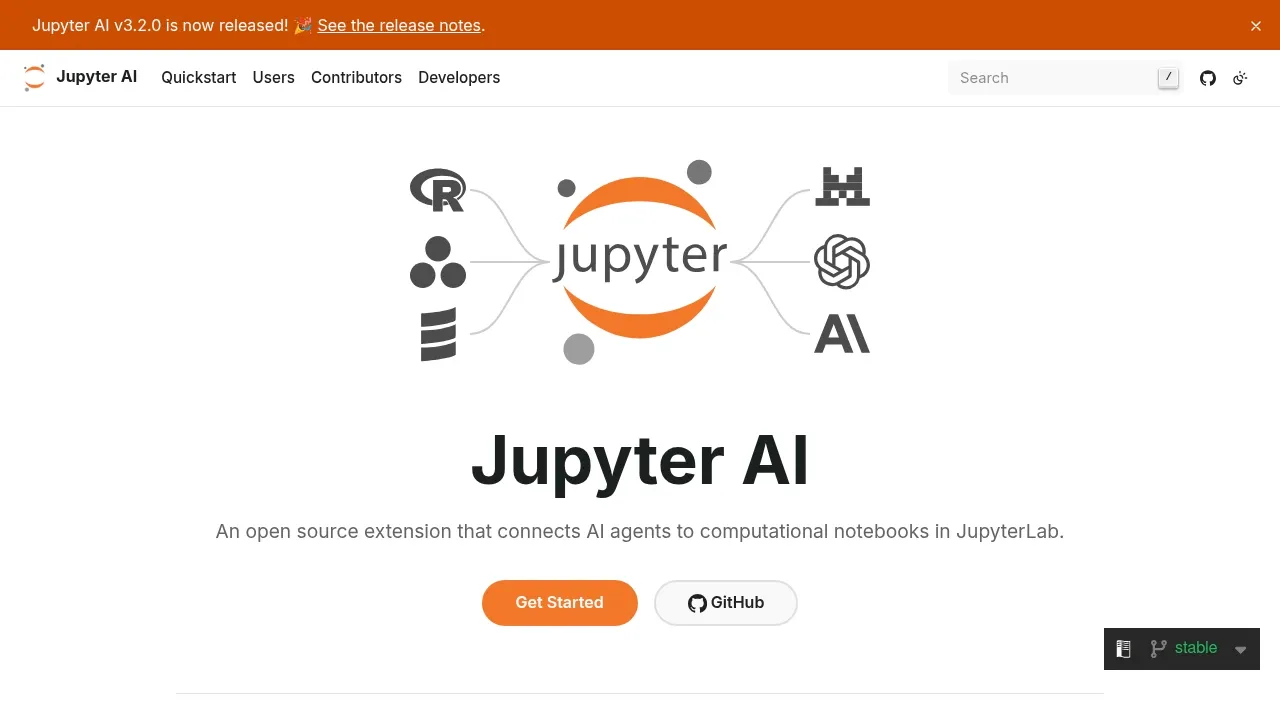
Jupyter AI connects AI agents to notebooks through a chat interface inside JupyterLab. It's for people who work in computational notebooks and want an agent to help write code, debug cells, or run notebook work without moving the conversation to a separate app. The extension runs within JupyterLab; the choice of agent determines the AI service it connects to.
Chats can include AI personas and other people connected to the same Jupyter server. You can keep several conversations open at once and share files or individual notebook cells as context through drag-and-drop attachments. That makes the notebook itself part of the conversation, rather than relying only on pasted code snippets.
Agents can edit files, run terminal commands, and interact with notebooks. JupyterLab shows their edits and notebook activity as they happen, including work to fix cell errors. Approval controls cover file writes, command execution, and MCP tool use, so you can review those actions before they proceed.
Agent choices include Claude, Codex, GitHub Copilot, Goose, Kiro, Mistral Vibe, and OpenCode. Jupyter AI uses the Agent Client Protocol (ACP) to connect compatible agents, which gives users a choice of assistants within the same notebook interface.
The extension is open source under the BSD-3-Clause license. Developers can create their own AI personas and connect custom MCP servers that provide domain-specific tools, resources, and prompts. Its built-in Jupyter MCP server gives agents access to notebook operations.


