
Windmill
Self-hosted workflow platform turns Python, TypeScript and other scripts into APIs and internal apps. Runs on Docker or Kubernetes; cloud hosting is available.
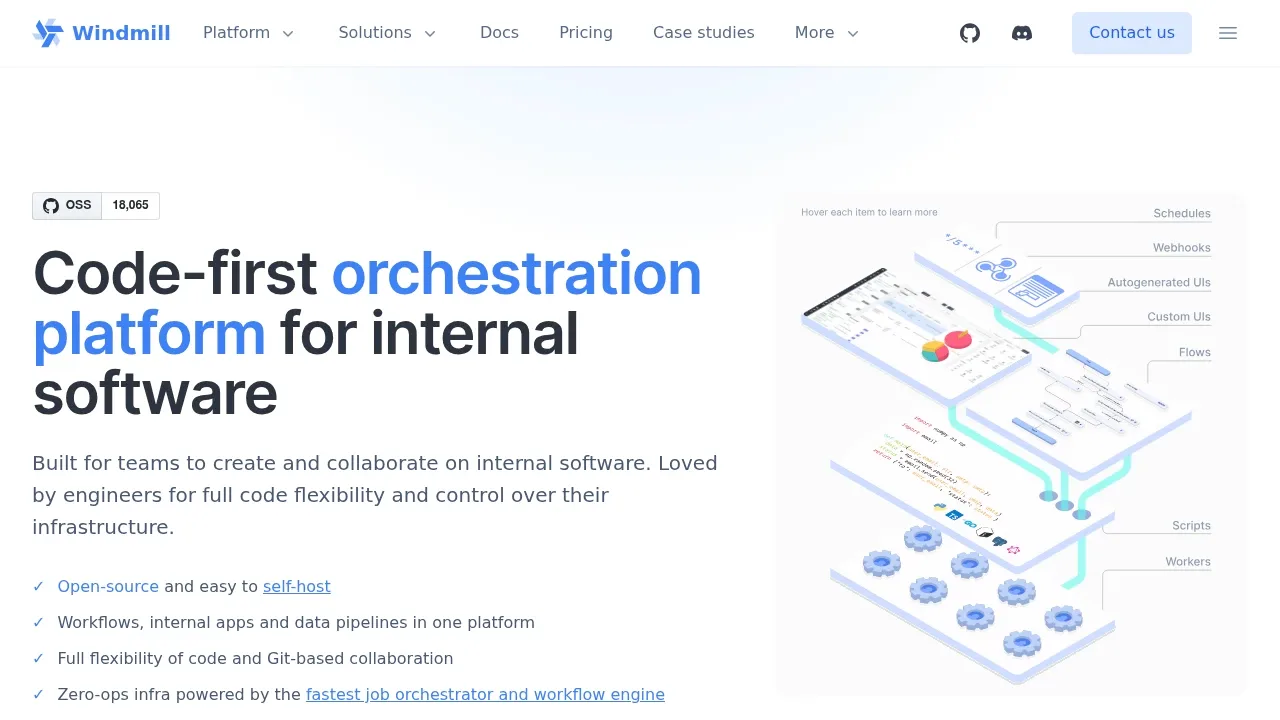
Windmill turns ordinary scripts into APIs, background jobs and internal apps that teams can share through a browser. It's for developers building internal software, data pipelines or AI agents who want to keep their code and infrastructure under their own control. You can self-host it with Docker or Kubernetes, or use Windmill Cloud, where Windmill hosts the platform.
A script can become a callable job and a generated form without a separate interface project. Teams can combine scripts into workflows or build custom interfaces with the app builder. Supported languages include Python, TypeScript, Go, Bash, SQL and Rust, so existing code can become part of a shared application.
Development can happen in the browser or in a local editor. Git versioning covers scripts, workflows, apps and infrastructure settings, giving teams a way to review and share changes. Integrations include PostgreSQL, Snowflake and Kafka; scheduled tasks support recurring work.
Shared workspaces provide permissions and encrypted credentials scoped to authorized users. Execution logs are searchable, and failures can trigger alerts through Slack, email or Teams. Dedicated worker groups let teams isolate critical jobs, with deployments ranging from a single server to Kubernetes clusters.
The open-source code uses the AGPLv3 license, and Windmill also offers commercial licenses and support. Its Rust backend uses PostgreSQL for job queuing, while workspace databases let apps and workflows use shared data.


