
deja-vu
Local memory for coding assistants that searches existing session history on macOS, Linux and Windows. MIT licensed, with offline indexing and search.
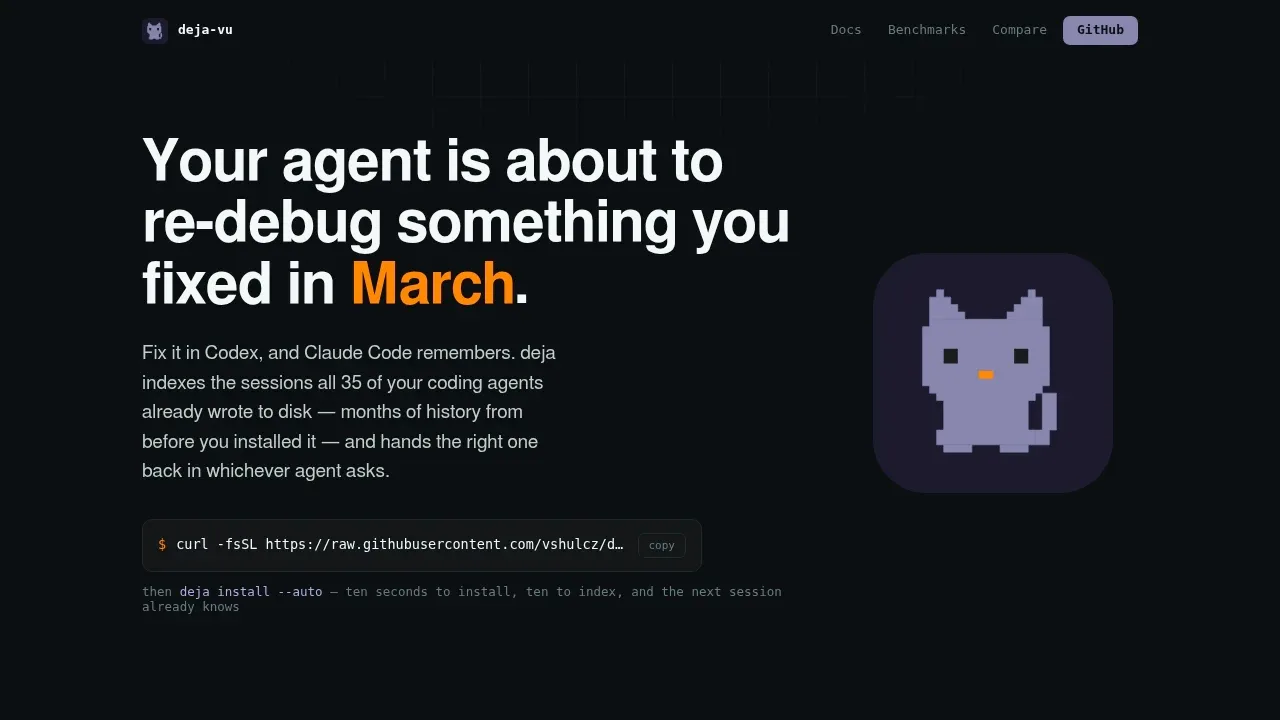
deja-vu gives coding assistants a shared memory of work already recorded on your machine. It searches sessions from before you installed it, so developers can recover an old fix or carry context between Claude Code, Codex CLI, Cursor and opencode without starting a separate collection of notes.
The transcripts remain the source of memory. Its index covers conversation text and details of the work itself, including files opened, commands and their exit status, and edits. Agents can retrieve relevant history through MCP. Where an agent supports hooks, recall can happen automatically around edits, commands and session starts, or restore details lost during context compaction.
Past decisions have context too. A reverted approach can carry a rejected status and the reason it was dropped, while search results can flag files that have changed since the original session. Support for resuming sessions and handing work to another assistant varies by integration.
The tool is free and open source under the MIT license, packaged as a single Go binary for macOS, Linux and Windows. Indexing and search work offline without an LLM, embeddings, an account or telemetry. It strips credentials while building the index, though the original transcripts still contain them. You can exclude projects or remove sessions from the index permanently.
Optional SSH sync transfers history between your own machines without a cloud intermediary. An optional embedding feature sends data to an endpoint you configure.


