
Laya
A local AI desktop app that gathers work notifications, researches context, and drafts actions using Ollama, LM Studio, or cloud models.
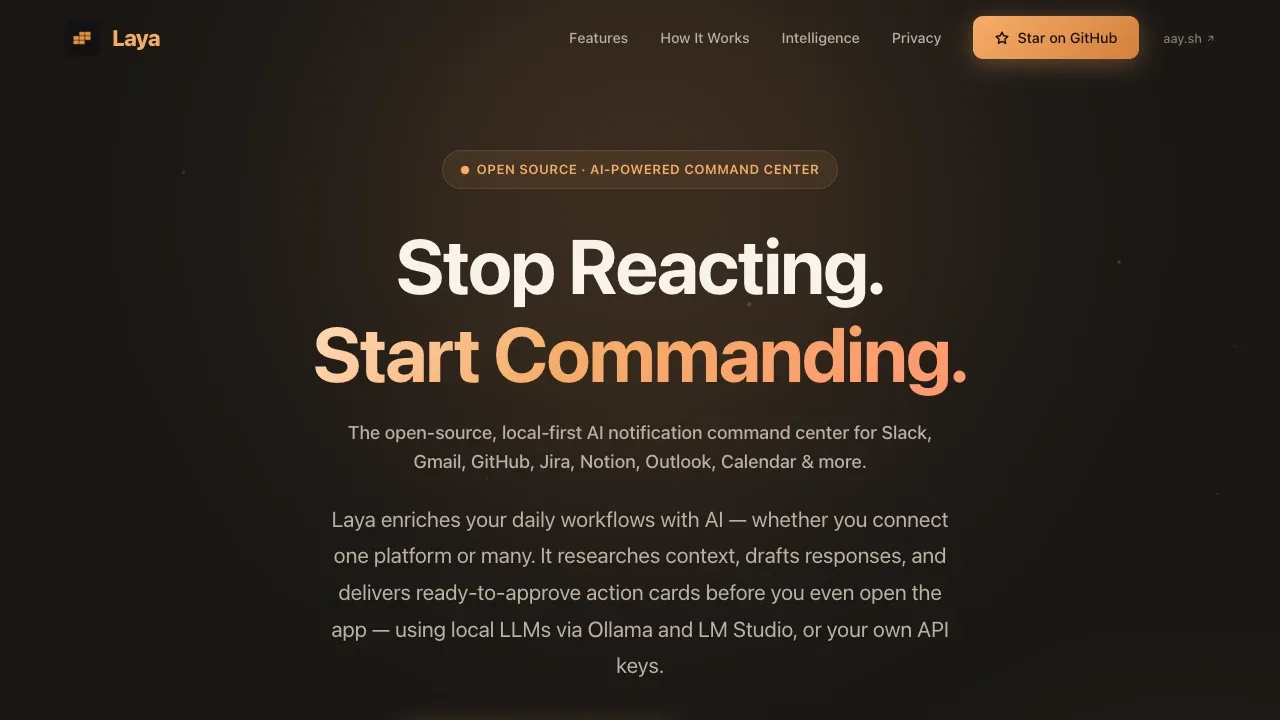
Laya brings work notifications into one feed for people managing email, tickets, pull requests, and team messages. It gathers related context and prepares action cards with drafts you can review before sending.
- Context and triage: Connect Gmail, Slack, GitHub, Bitbucket, Jira, Linear, Notion, Outlook, and Google Calendar, then sort notifications by priority and group related conversations across services.
- Drafts and automation: Review suggested replies and send messages or ticket comments from one interface; rules can also classify, route, or act on events, with a searchable record of what ran.
- Briefings and summaries: Read a daily briefing of meetings, pending actions, and updates, or use a rolling summary to catch up after time away.
- Search and documents: Ask questions across connected events and local documents, follow citations to specific pages, and trace a ticket or project through its related messages and pull requests.
- Coding agents: Launch Claude Code, Gemini CLI, Codex, Pi CLI, or Cursor Agent from a card, with its context attached, and guide the session through an interactive workspace.
Laya is free, open source under Apache 2.0, and runs as a desktop app on macOS, Windows, and Linux. macOS builds support Apple Silicon and Intel. It stores messages, events, and its knowledge index on your computer without a Laya cloud account. Connected services still require access to those services; local inference doesn't make notification syncing offline.
Ollama and LM Studio let you process content with local LLMs. Claude, GPT, Gemini, and OpenAI-compatible endpoints are alternatives, with cloud requests going to the chosen provider using your API keys. Sensitive emails and direct messages can be restricted to local models. Its MCP server lets clients such as Claude Desktop, Cursor, and VS Code access your data with separate read, write, and outbound-action permissions.
 Logotyper


