Optio
Self-hosted AI agent orchestration runs on Kubernetes and paired machines, with MIT-licensed code and automated PR feedback across multiple agent vendors.
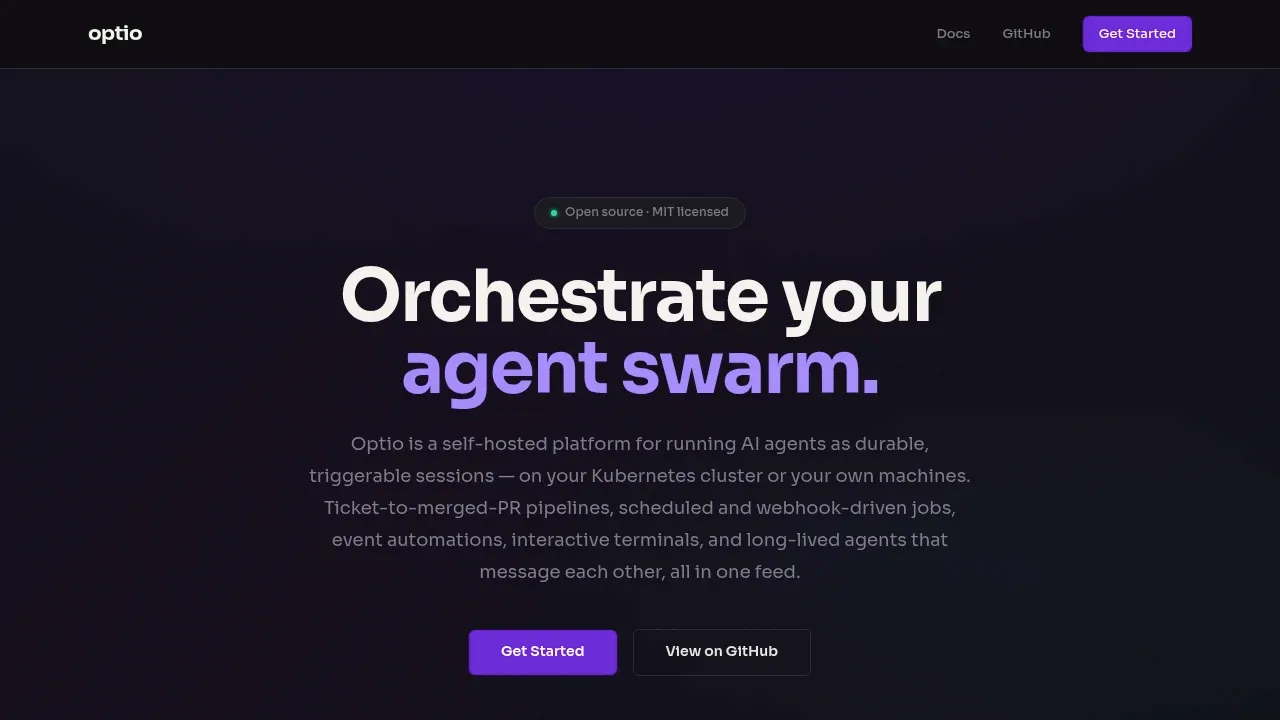
Optio is a self-hosted AI agent orchestration platform for teams running coding and automation work on their own Kubernetes clusters or paired machines. Its pull request workflow follows a ticket through coding, CI, review, and merge, resuming the agent when checks fail, conflicts arise, or a reviewer asks for changes. When checks pass and approval arrives, it squash-merges the PR and closes the issue.
The same dashboard covers scheduled jobs, webhook responders, and interactive terminals. Persistent agents keep memory between turns, wake on messages or events, and communicate with other agents. Teams can use these to coordinate a dispatcher, specialists, and a reviewer, while tracking their work in a shared activity feed.
Optio supports Claude Code, OpenAI Codex, GitHub Copilot, Google Gemini, Cursor, OpenCode, and OpenClaw. Teams can choose an agent and model per session or repository, including a different vendor for code review. Tickets from GitHub, GitLab, Linear, Jira, and Notion can start work; GitHub, Slack, and Linear events can trigger sessions too. MCP connections give agents access to services such as PostgreSQL and Sentry, with access controls per repository and runtime.
The orchestration software is open source under the MIT license. Sessions run in cluster pods or directories on paired machines, where they use the machine's own CLI login. Server secrets stay off laptops. The browser dashboard provides live logs and cost tracking, and interactive terminals are also accessible through iOS and Android apps.


