
Composio
AI agent integrations with MIT Python/TypeScript SDKs, a hosted runtime, and separately arranged deployments in your own environment.
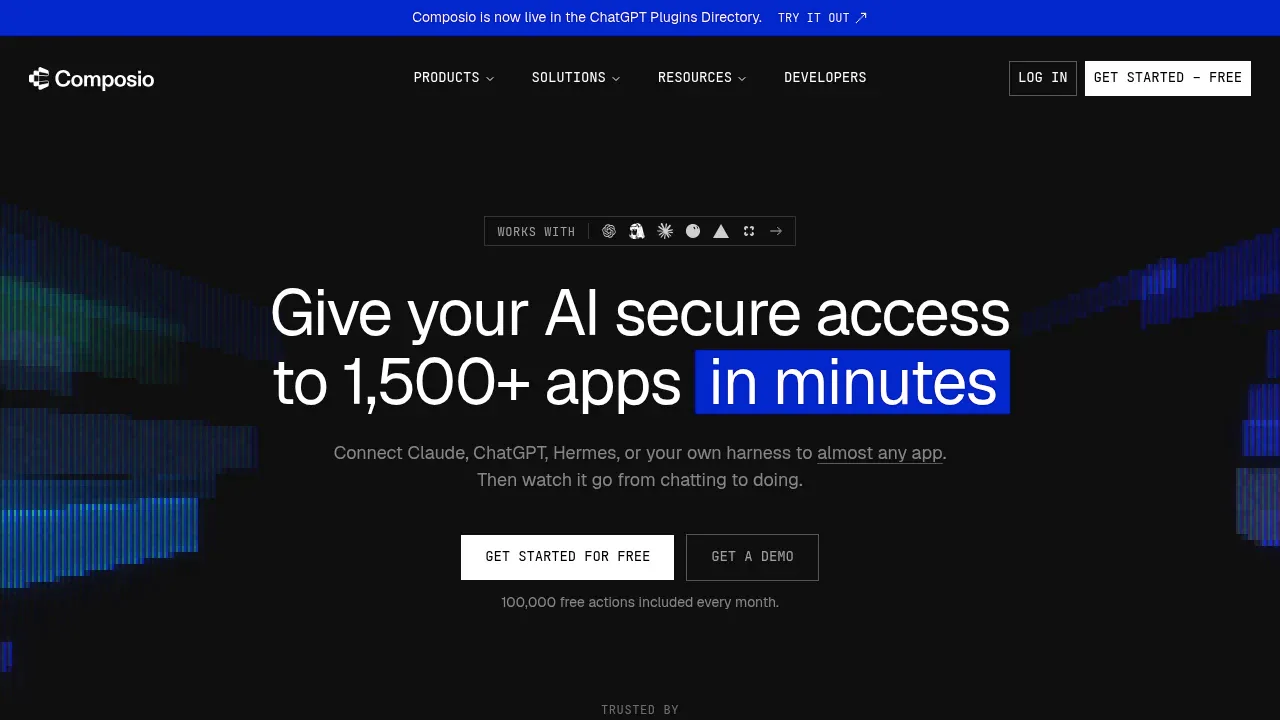
Composio connects AI assistants and custom agents to apps such as Gmail, Slack, GitHub, and Linear. It's for people who want their assistant to act on requests across apps, and developers who don't want to maintain each integration themselves. Its CLI gives coding agents a local interface; the standard setup uses Composio's hosted authentication and execution service. It requires an account and internet access.
The platform finds relevant actions as a task unfolds instead of loading the entire tool catalogue into the model's context. For longer tasks, an isolated remote sandbox holds code, files, and intermediate results, keeping large responses out of the conversation. Agents can chain app actions with model calls and retain session state across turns. App triggers let agents respond to events.
Composio manages OAuth sign-in, API keys, and token refresh, with granular permissions for connected accounts. You can reuse connections across assistants, connect multiple accounts for the same app, and disconnect them when needed. Credentials and sensitive customer data are encrypted at rest and in transit.
It works with Claude, Codex, ChatGPT, Cursor, and assistants that accept MCP servers. Custom MCP servers can extend its app connections. Developers get open source Python and TypeScript SDKs under the MIT license, plus adapters for frameworks including OpenAI Agents, Claude Agent SDK, LangGraph, and Vercel AI SDK. A managed MCP gateway provides a shared endpoint for tools and agents.
Separately arranged deployments can run Composio in your own environment with vendor-provided Helm support. The MIT SDK repository does not provide the full self-hosted platform; deployment terms and operations are arranged with Composio.


