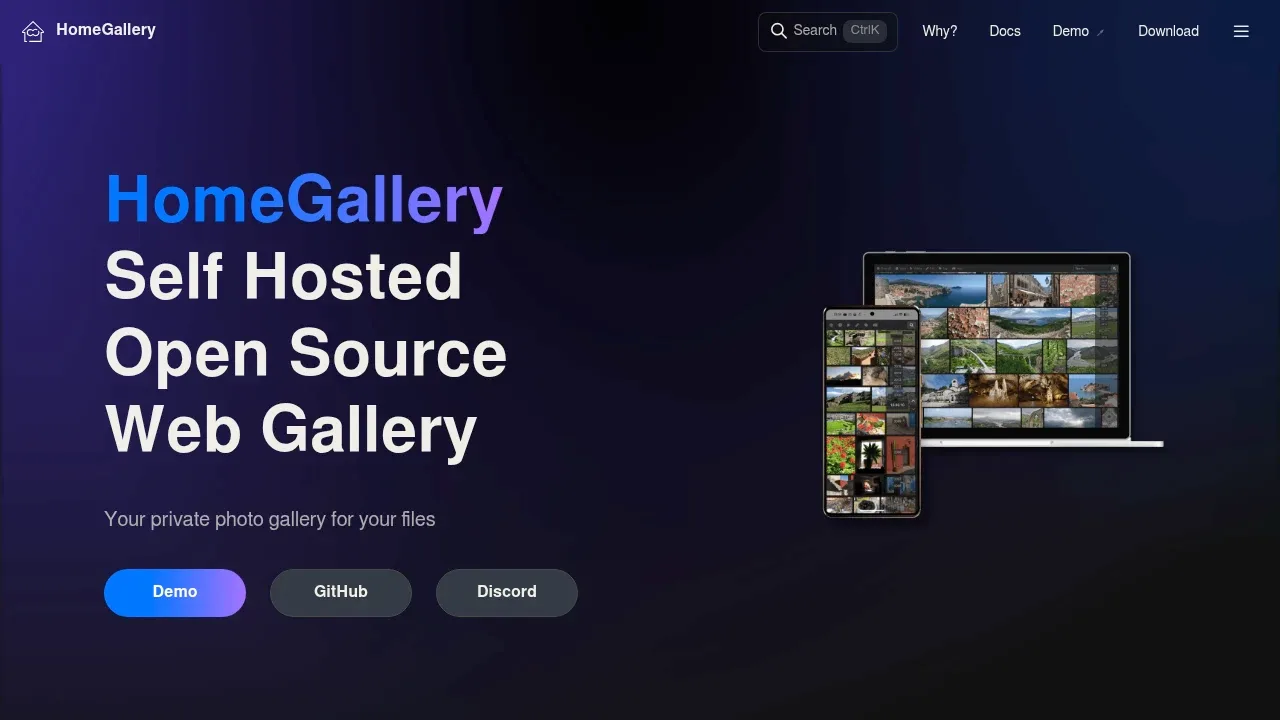
HomeGallery is a self-hosted web gallery for people who want to browse their personal photos and videos while keeping their existing files and folders. It brings multiple media directories into one gallery, with a mobile-friendly browser interface and PWA support. It's open source under MIT.
Similar image search helps you find related photos without tagging the whole archive first. A sunset photo can lead you to other sunsets, while face detection and similarity search help you find pictures of the same person. You can tag individual images or selections, combine search conditions, and browse GPS-tagged photos on a map with address information.
The gallery runs on Linux, macOS and Windows, or in Docker, and supports low-powered hardware such as Raspberry Pi. Its privacy depends on where image analysis runs: by default, it sends preview images to the public API at api.home-gallery.org for image discovery, object detection and face recognition. That service says it doesn't retain images or private data. You can host the analysis API locally instead. Address lookups send GPS coordinates to OpenStreetMap's Nominatim service.
HomeGallery is designed for a single user with some technical knowledge. It supports read-only media sources and lets you browse generated previews after the original disk goes offline. Identical files are processed once, and renaming files doesn't require new previews. It also handles video transcoding, exports metadata to XMP sidecar files, and can export a static web gallery.
Claim this page with an email at home-gallery.org. HomeGallery gets the verified badge, and you can upgrade the listing to be featured on localhosted. Proud to be listed? Put our badge on your site.
Want more people to find HomeGallery?Promote it
Something wrong or outdated on this page?
29.2KUpdated 1 day agoAGPL-3.0
macOS · Windows · Linux · iOS · Android · Web#Multi-user access#Role-based access#Semantic search
Ente Photos is a Google Photos alternative for people who want encrypted photo backups and AI search without giving a storage provider access to their library. You can use its hosted service or self-host the server. Face detection, grouping and natural-language search run on your device; the hosted service stores your encrypted backups.
8.1KUpdated 1 day agoMIT
Windows · Linux · iOS · Android · Docker · Web#Multi-user access#ONNX#Semantic search
89Updated 22 hours agoGPL-3.0
macOS · Windows · Linux · Docker · Web#Batch processing#Hugging Face integration#ONNX
PixlStash is an open-source image manager for photographers, AI creators and people curating image datasets. It combines library search with tools for reviewing tags, ranking images and sending selected work through ComfyUI. You can use a desktop app or a self-hosted server with a browser interface.
808Updated 7 years agoGPL-2.0
macOS · Windows · Linux#Batch processing
699Updated 2 weeks agoAGPL-3.0
Linux · Docker · Web
Nextcloud Recognize automatically categorizes media on your self-hosted Nextcloud server. It's for people who want to organize photo, video and music collections without sending sensitive data to a cloud recognition service. Image processing runs on your Nextcloud machine.
40.3KUpdated 20 hours ago
macOS · Windows · Linux · Docker · Web
PhotoPrism is a self-hosted photo and video library for people who want to organize personal media on their own hardware or server. Its AI recognizes faces and labels pictures by content and location, so finding a photo doesn't depend entirely on folders or tags you've added yourself. You browse and share the library through a web app.
LibrePhotos is a self-hosted photo manager for people who want to organize a photo library on their own server, with AI tools for finding images and grouping faces. It scans files already on your storage and supports RAW photos as well as videos. The project is open source under the MIT license.
digiKam is a local photo manager and image editor for photographers who need to organize large collections of photos, RAW files and videos. It runs on Linux, Windows and macOS and is open-source software under GPL-2.0. Its archived GitHub mirror points contributors to the maintained KDE repository.