
Octop
A self-hosted AI assistant for households and small teams, with personal agents, document search, and support for Ollama and OpenAI-compatible APIs.
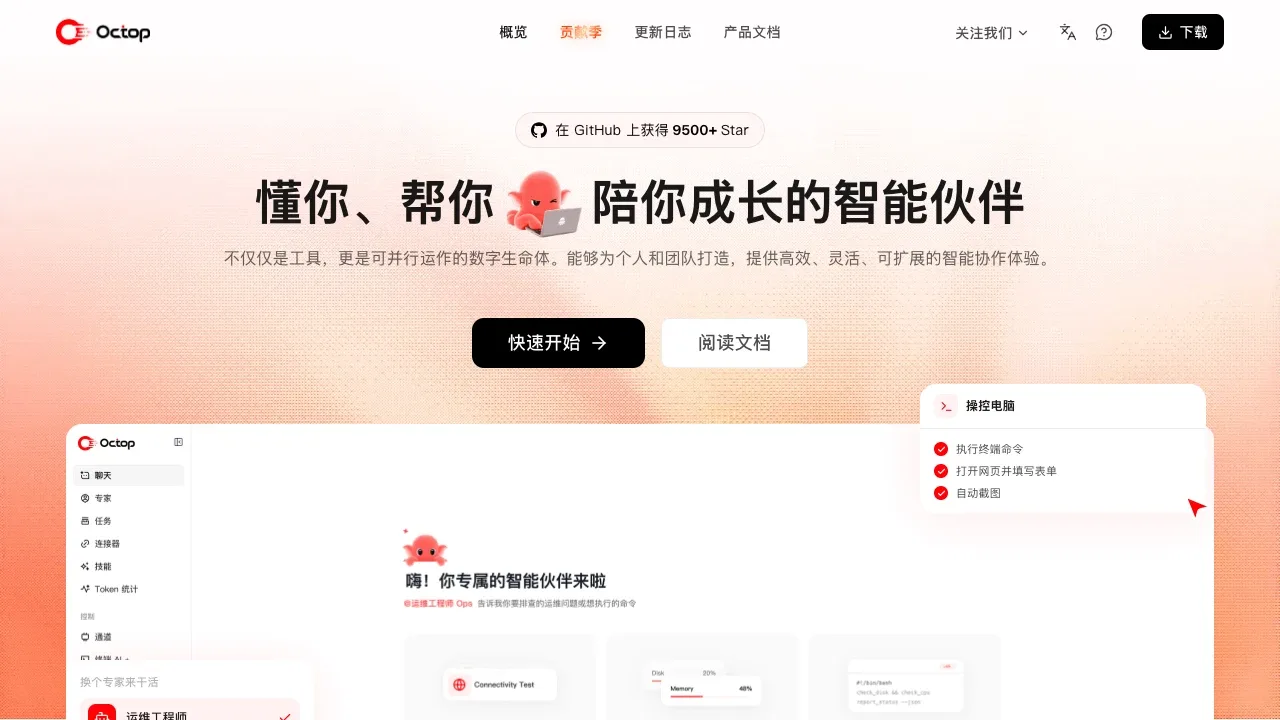
Octop is a self-hosted AI assistant for households and small teams that want personal agents in a shared deployment. Each user can switch between specialists with separate workspaces, model connections and scheduled tasks.
- Personal and shared agents: Give users their own specialists and share agent setups, skills and knowledge bases within the same deployment.
- Documents and memory: Agents can answer questions using your documents and retain memory that moves with their workspace.
- Chat and scheduled work: Use the web dashboard or messaging services such as Telegram, Discord, WeChat, Feishu, DingTalk and WeCom, and describe recurring jobs in natural language.
- Coding assistance: Connect Octop agents to editors through ACP or delegate coding tasks to OpenCode, Claude Code, CodeBuddy and Codex.
- Browser and desktop tasks: Agents can automate browser work and capture screenshots; the dashboard also provides an interactive terminal and remote desktop control.
Octop is open source under the MIT license and runs on Windows, macOS and Linux, with native desktop clients and FnOS NAS packages. It supports Ollama, OpenAI-compatible APIs and DashScope for Qwen. The assistant runs on your hardware, but cloud model connections send requests to the selected provider, and messaging integrations use external services.
Conversations, credentials and workspaces use local storage by default. Optional storage backends include PostgreSQL and COS/S3. OAuth and MCP connectors link agents to external services, while plugins extend their capabilities. Access controls include user isolation, tool approvals, shell command guardrails and personal-data redaction.


