v0 alternatives for building web apps with AI
Compare Dyad, Bolt.diy and OpenHands for AI web app development. Choose a desktop builder, browser code workspace or coding agent platform.
v0 is Vercel's AI app-building service, combining generated interfaces with visual editing, GitHub sync and deployment to Vercel. It suits people who want to turn a description into a web project and continue changing it through conversation. A replacement needs a place to inspect the code as well as generate it.
Dyad provides a desktop builder with local project files, repository import and visual changes. Bolt.diy brings app generation into a browser workspace with an editor and terminal. OpenHands is a broader coding agent platform for developers managing their own environment. These v0 alternatives separate the agent workspace from the hosting service you use for the finished app.

A local AI app builder that turns prompts into web apps, keeps project files on your machine and works offline with Ollama or LM Studio models.
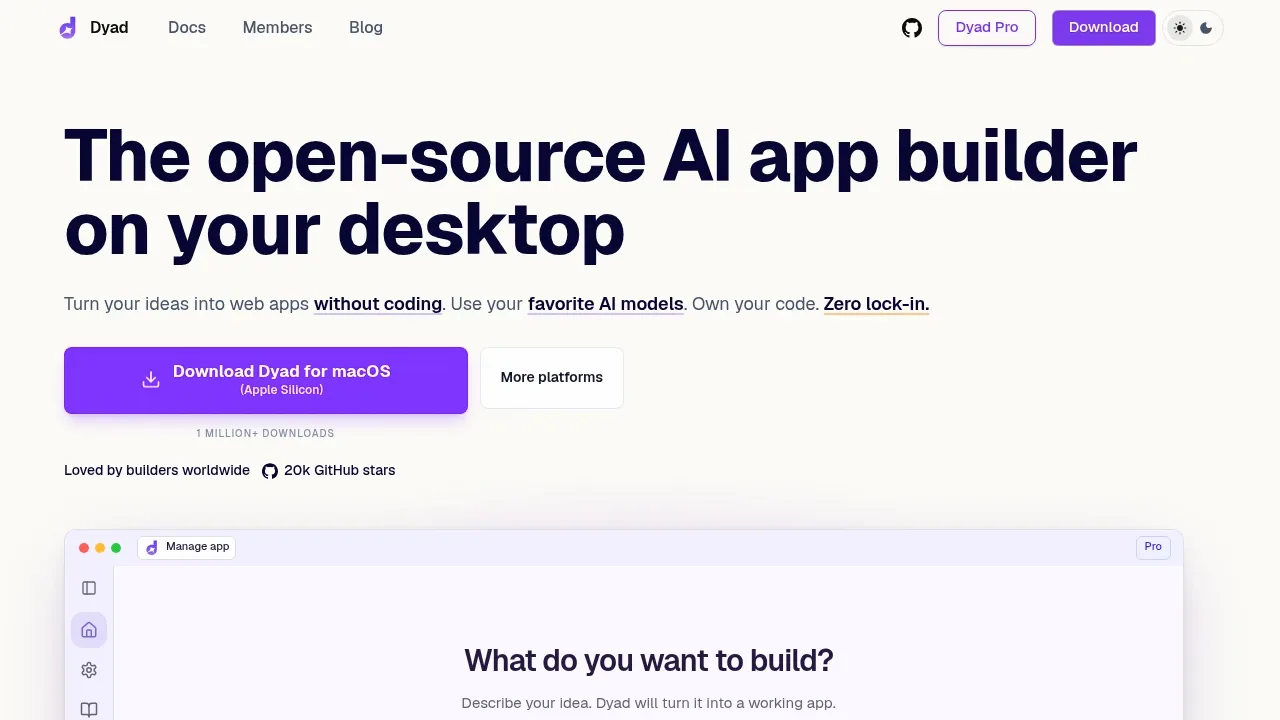

A self-hosted AI coding assistant for full-stack web apps, with local models through Ollama or LM Studio and a browser workspace or desktop app.
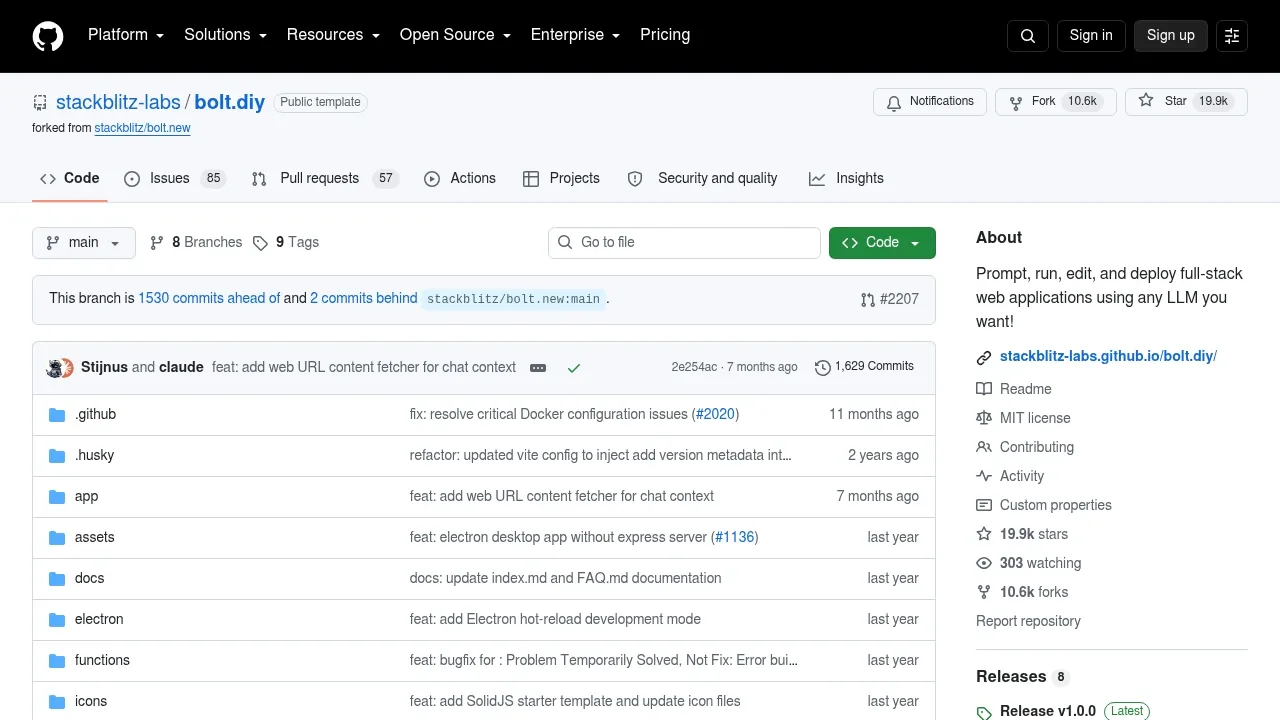
Bolt.diy covers v0 full-stack web development with a browser editor, terminal and live preview. Choose a model backend, review diffs and restore snapshots, then export or push the project. It supports database and deployment connections; commercial WebContainers use has separate terms.

A self-hosted visual editor for Next.js and Tailwind CSS websites that combines direct design changes with AI code editing.
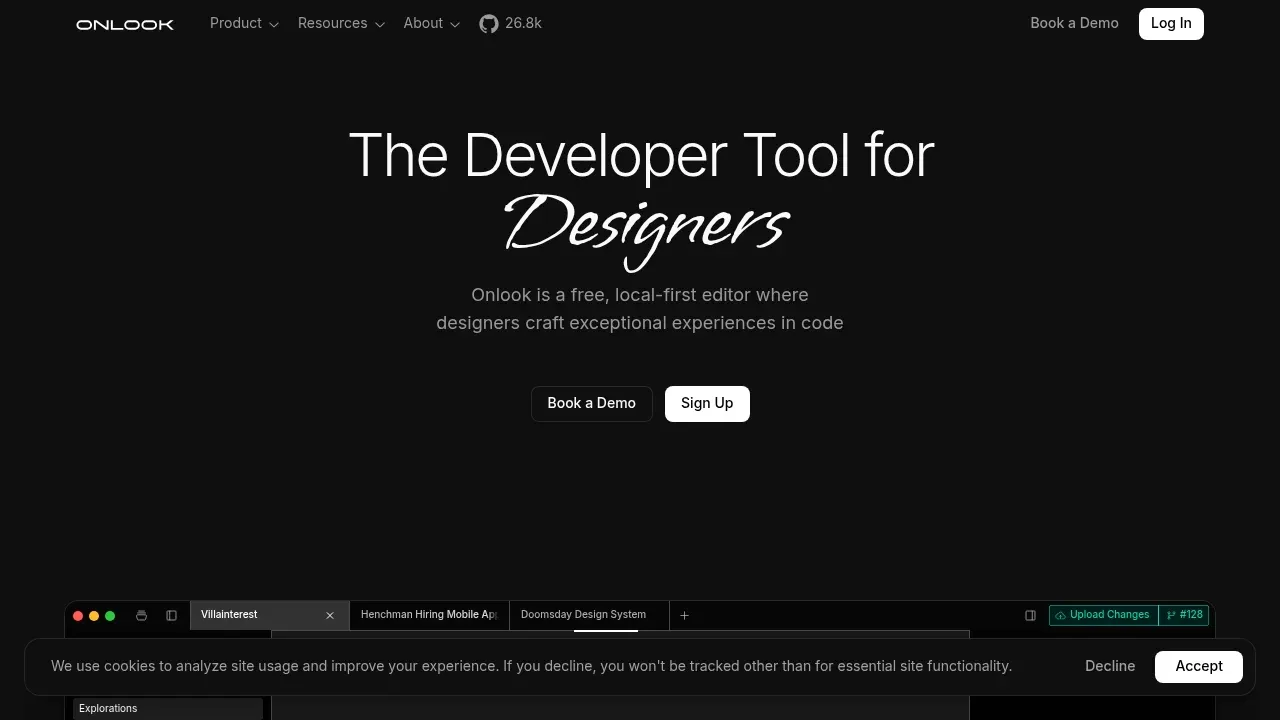
Onlook is a visual alternative for creating and refining React interfaces. Import a codebase or start from text or an image, edit the live page and use AI to change Next.js and Tailwind code.

An open-source desktop AI design tool that creates prototypes and slides using Ollama or cloud models, with local storage and editable file exports.
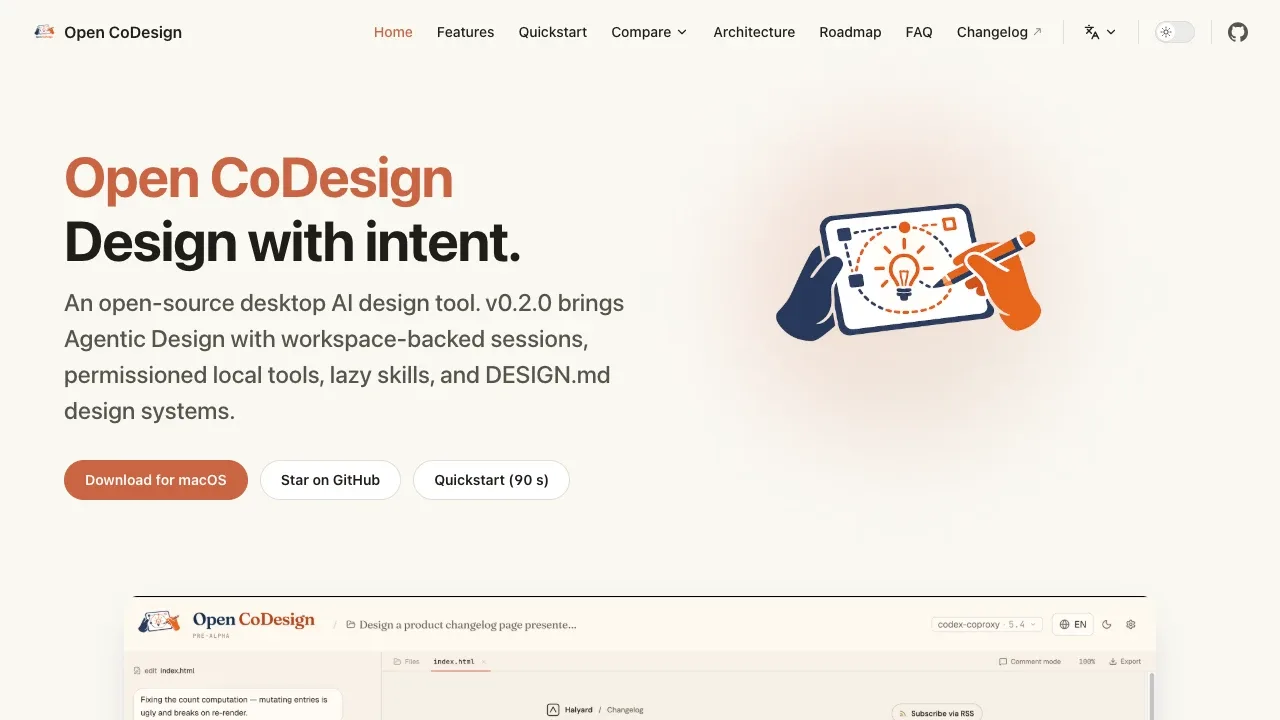

A local AI design workspace that uses coding agents to create editable prototypes, slides and media, with desktop apps and self-hosted deployment.

A self-hosted AI UI builder that renders interfaces from text descriptions and converts HTML to React or Svelte, using Ollama or cloud models.

An open-source AI app generator you can self-host, with browser previews and cloud inference through Together AI. Requires internet access and an API key.
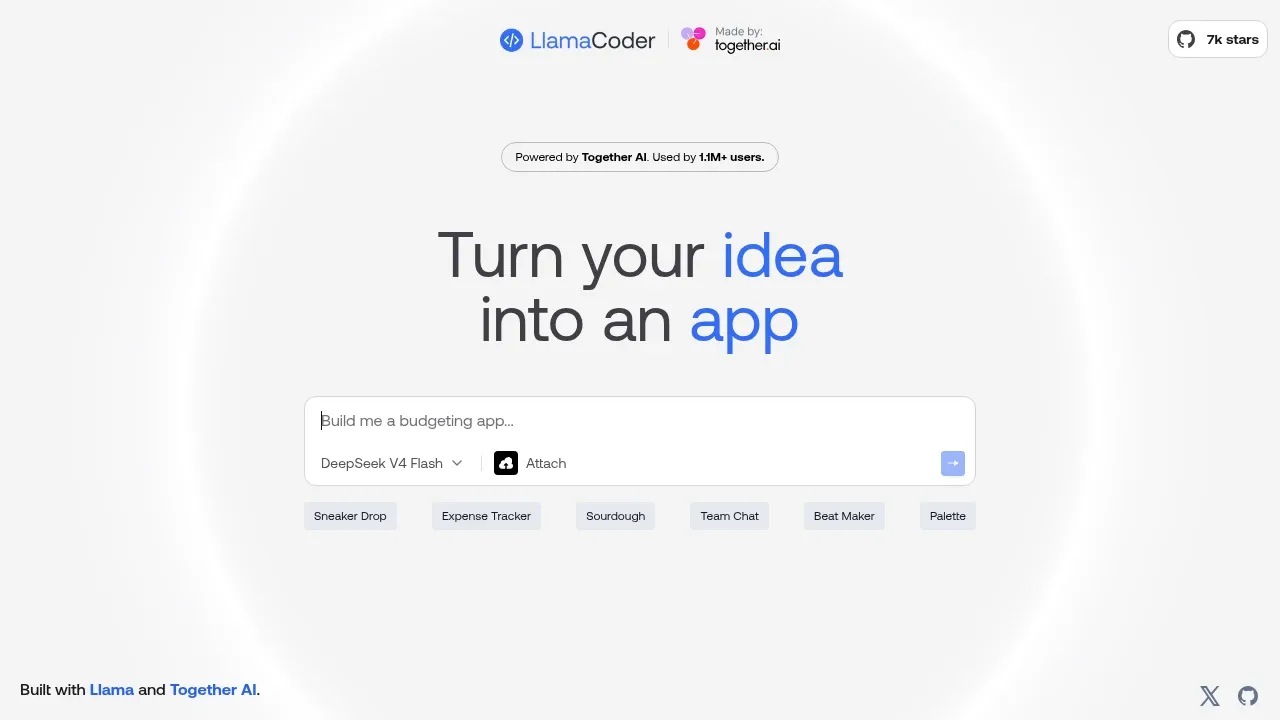
LlamaCoder suits small v0-style app prototypes generated from one written idea. Inspect the result in a sandboxed browser preview and work with the source code. Its self-hosted app still sends generation requests to Together AI, so it is not an offline model runtime.

A self-hosted AI coding agent platform runs locally or on servers, supports Claude Code and Codex, and automates engineering workflows.
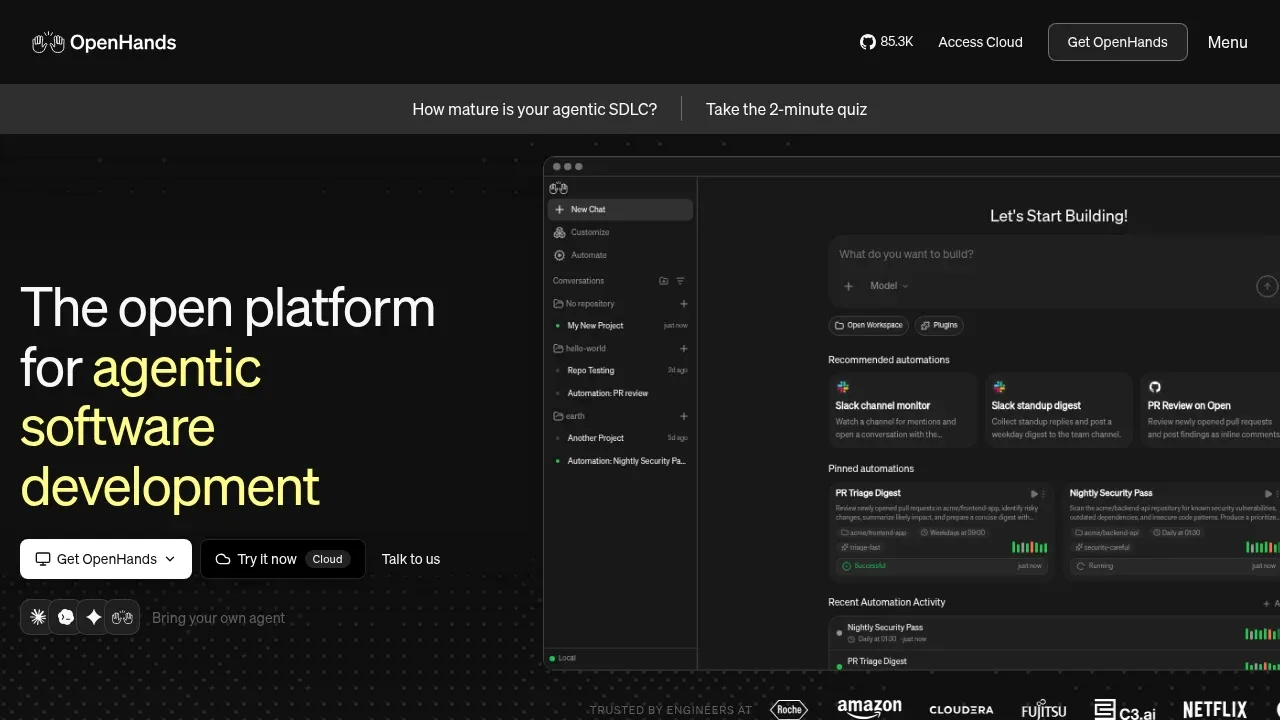
OpenHands covers v0 development tasks when you need a broader coding agent environment. Agents change files, investigate failures, run checks and prepare pull requests. Operate its own agent on your infrastructure; it does not bundle v0's app hosting and managed services.

An open-source AI app builder template supports Ollama and cloud models, with generated code running in E2B sandboxes.
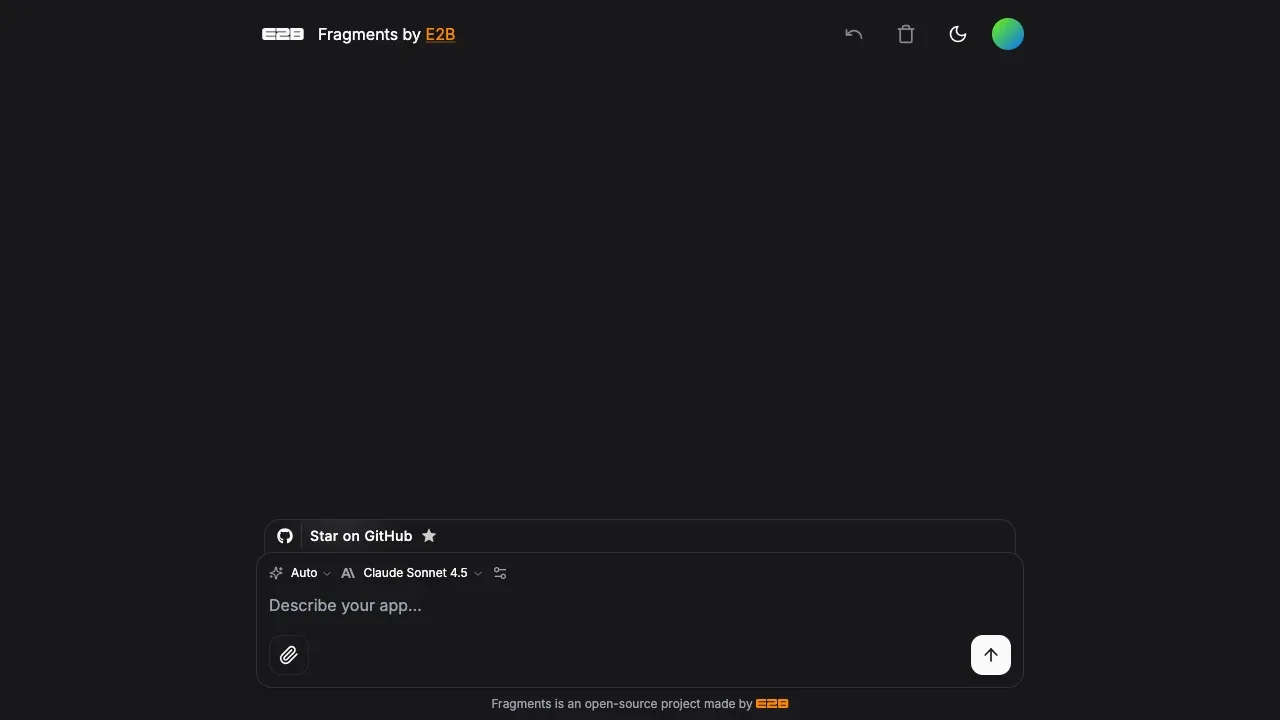
Generate runnable applications from prompts using a customizable interface, model providers and sandbox templates. Fragments supports Ollama for generation but uses E2B's hosted sandbox for execution; it does not reproduce v0's managed project and deployment service.
For v0, start with Dyad. Other alternatives include Bolt.diy, Onlook, Open CoDesign and OpenDesign.
Most are Prompt-to-App Builders; others include AI Code Editors.
People also replace
See all
Bolt alternatives

Lovable alternatives

Replit alternatives
