Notion alternatives for offline notes and workspaces
Compare AppFlowy, AFFiNE and Hillnote for documents, databases and notes. Explore self-hosted workspaces and files you keep on your device.
Notion brings notes, documents and project databases into one workspace, with AI features alongside your writing. A page can be a personal note or part of a shared wiki. When looking for Notion alternatives, decide whether you want to recreate that workspace or keep simpler files on your own device.
AppFlowy covers documents and project boards with collaboration, while AFFiNE adds a whiteboard canvas. Hillnote and Logseq suit people who want notes stored as portable files. Several options below support self-hosting or local AI, but check the AI connection separately: local notes can still use a cloud model.

Workspace for projects, wikis and databases. Its desktop Local AI plugin connects to Ollama; AppFlowy also offers self-hosted servers with private models.
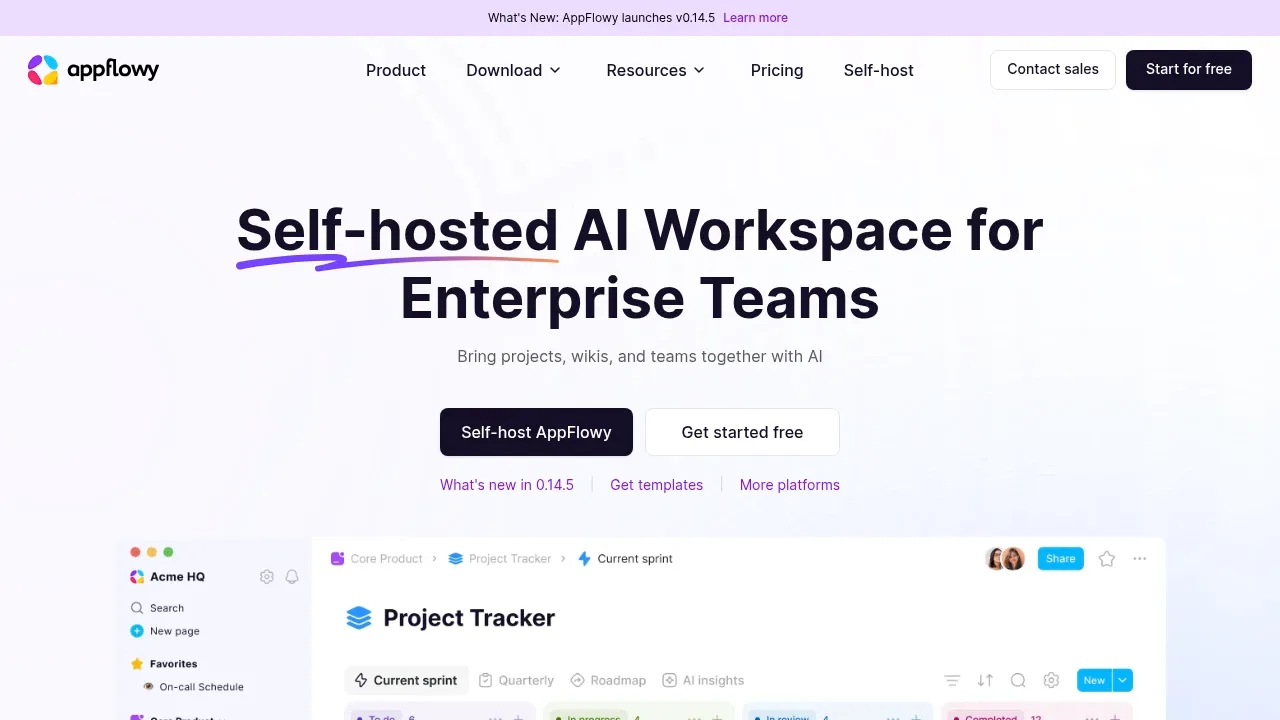
AppFlowy is built as a Notion alternative: documents, wikis, databases and project boards in one workspace, with real-time editing and comments. AI search, writing help and chat can run on self-hosted models.
There are desktop, mobile and web apps, and teams moving from Notion can get migration help.

A local-first knowledge workspace with optional AI, on-disk data, desktop and mobile apps, and Docker self-hosting.
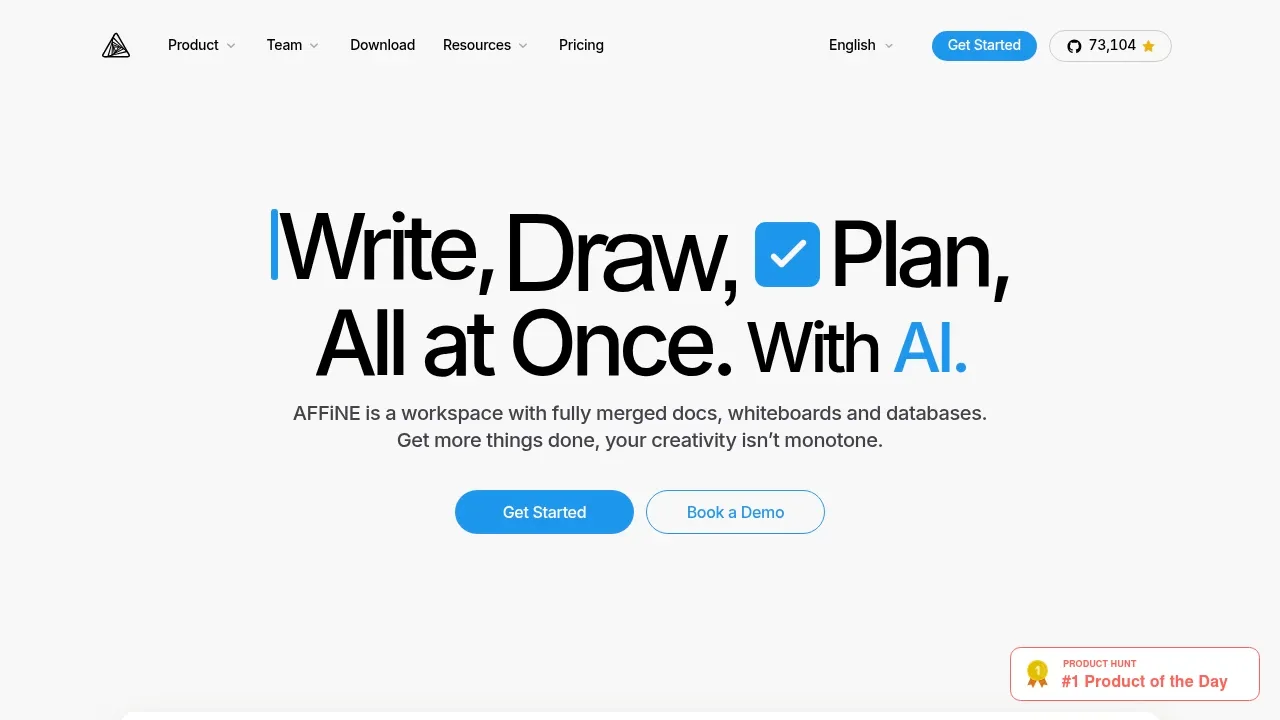
AFFiNE puts a block editor, databases and a whiteboard canvas in one local-first workspace, so a page can sit next to a diagram or a Kanban board. Workspace data stays on your disk, with optional sync and collaboration.
Its AI drafts text, turns outlines into slides and summarizes articles as mind maps. There are desktop, web and mobile apps, and you can self-host the server with Docker.

An open-source team wiki with on-premises deployment, AI answers with citations, and support for Ollama, vLLM and cloud LLM providers.
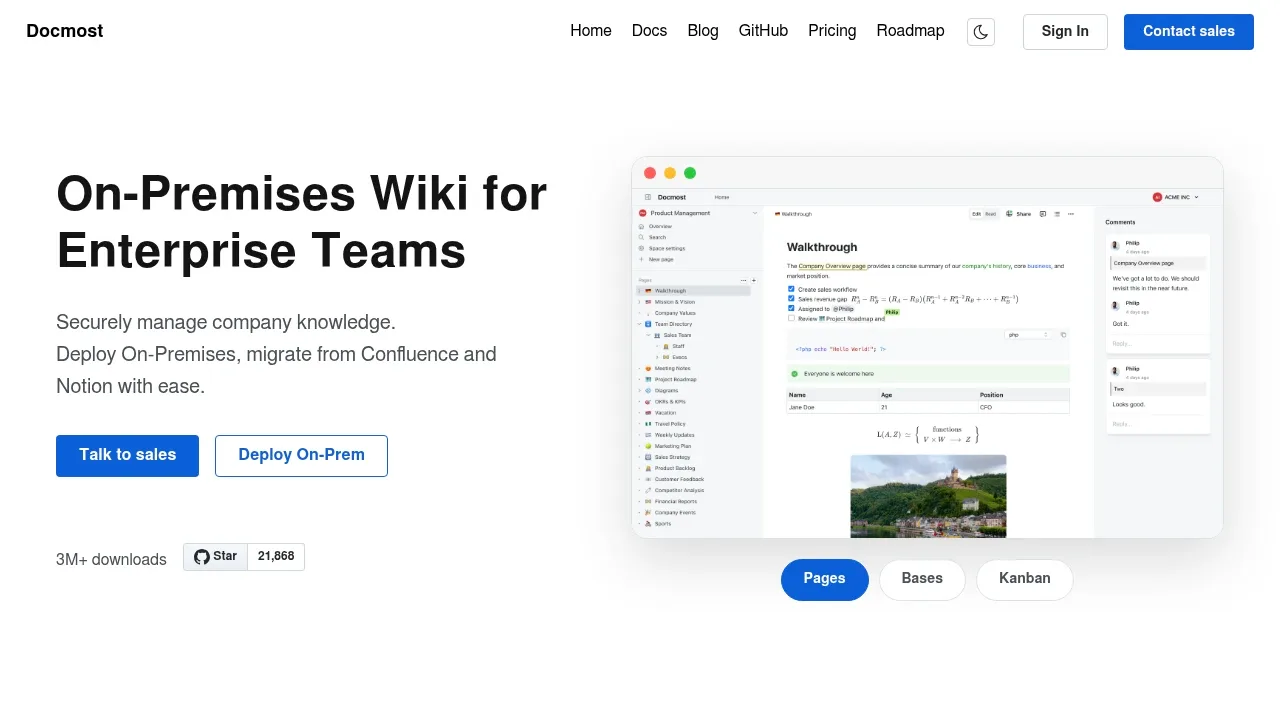
Docmost replaces the shared-wiki side of Notion with collaborative pages, spaces, permissions and page history on your own server. Imports include Notion. Its separately licensed AI search and chat answer documentation questions with citations and can use local model providers.

An AI writing workspace for Mac, Windows, iOS and Android that stores Markdown locally and works offline with Ollama or Apple Intelligence.
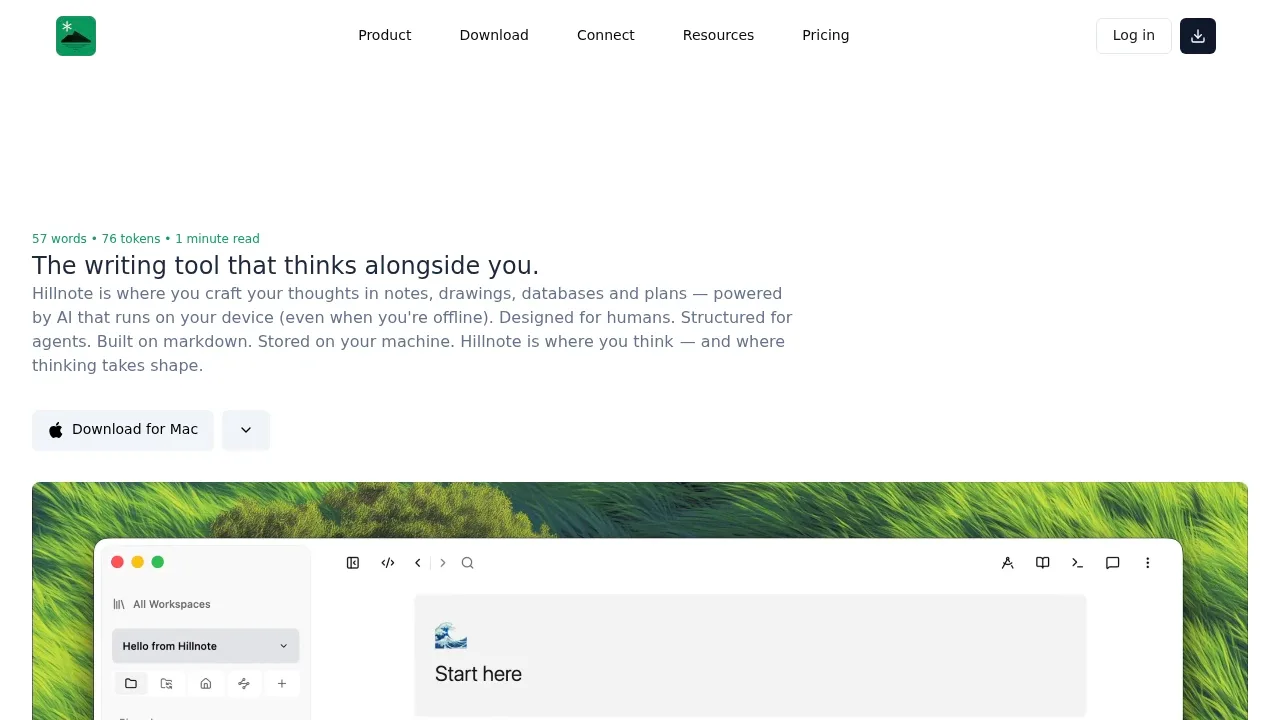
Hillnote keeps documents, databases, kanban boards, canvases and slides as plain Markdown files on your disk, so they also open in other editors. It needs no account to start.
Local AI through Ollama or Apple Intelligence edits and rephrases text offline; cloud models and sync are optional. The core editor and local AI are free.

A self-hosted knowledge workspace with block links, Markdown editing and AI chat through the external OpenAI API, licensed under AGPL-3.0.
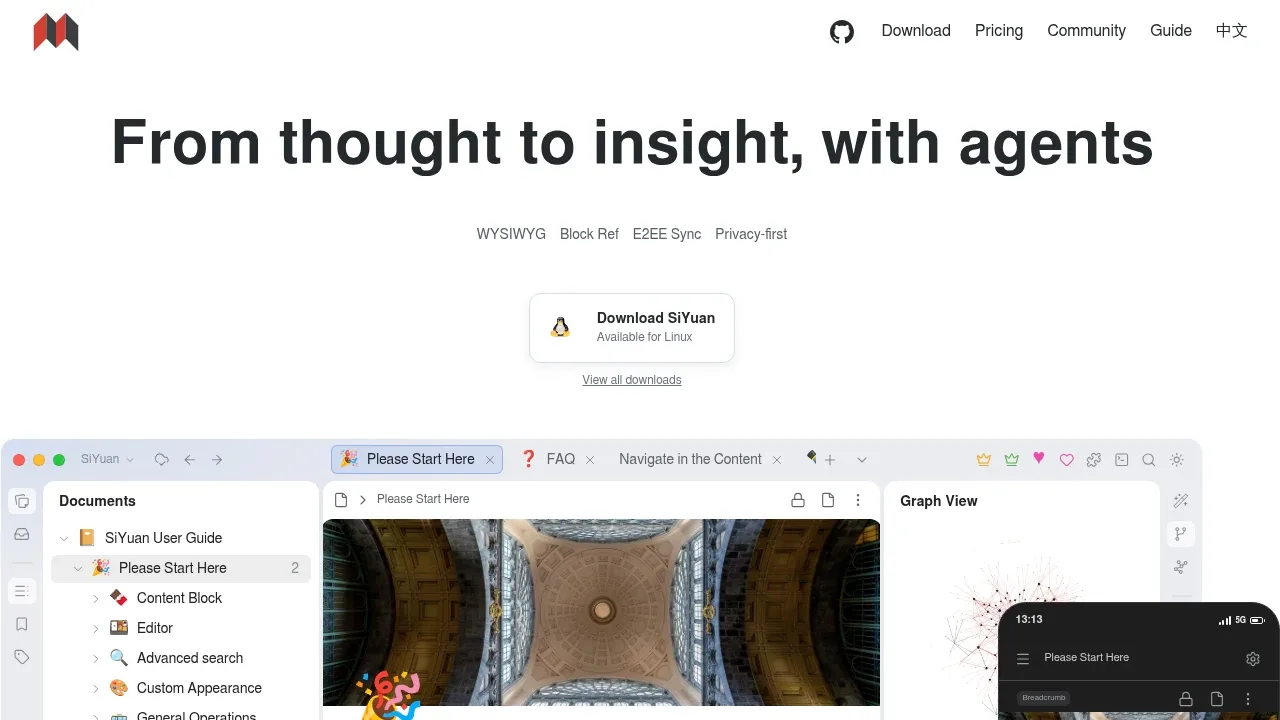
SiYuan suits connected notes, block references and structured database tables, with visible Markdown formatting and PDF annotations. Its AI chat uses the external OpenAI API. Docker provides browser access only, with fewer import and export options than the desktop application.

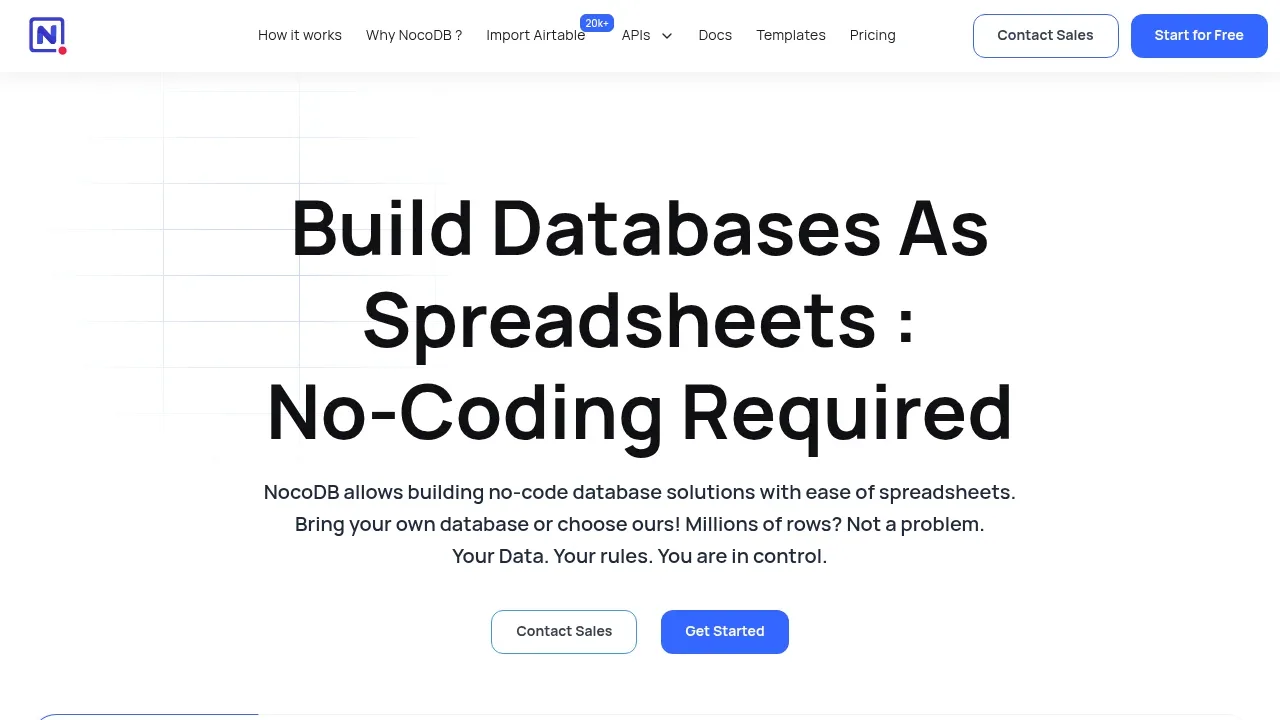
A no-code database and application builder with self-hosted and cloud options, AI workflows, and a spreadsheet interface for team data.
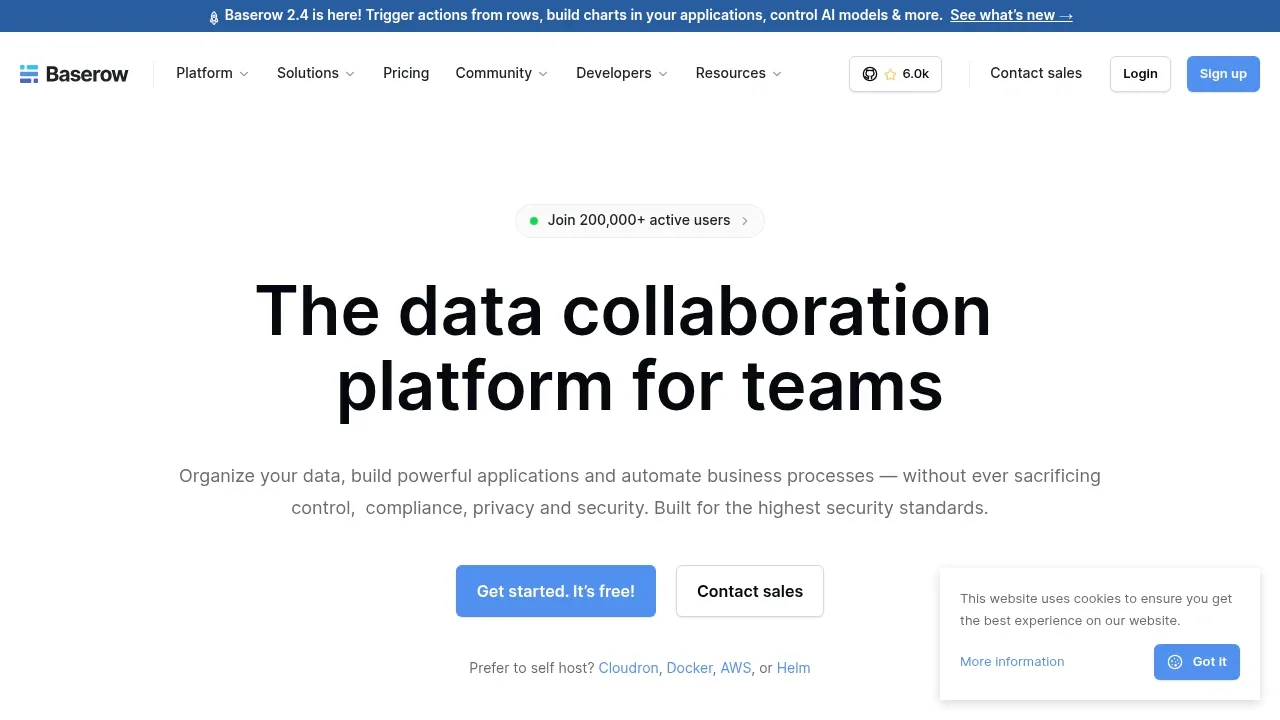

A self-hosted Airtable alternative that presents PostgreSQL and MySQL databases as spreadsheets. Runs on your server with Docker; hosted service available.

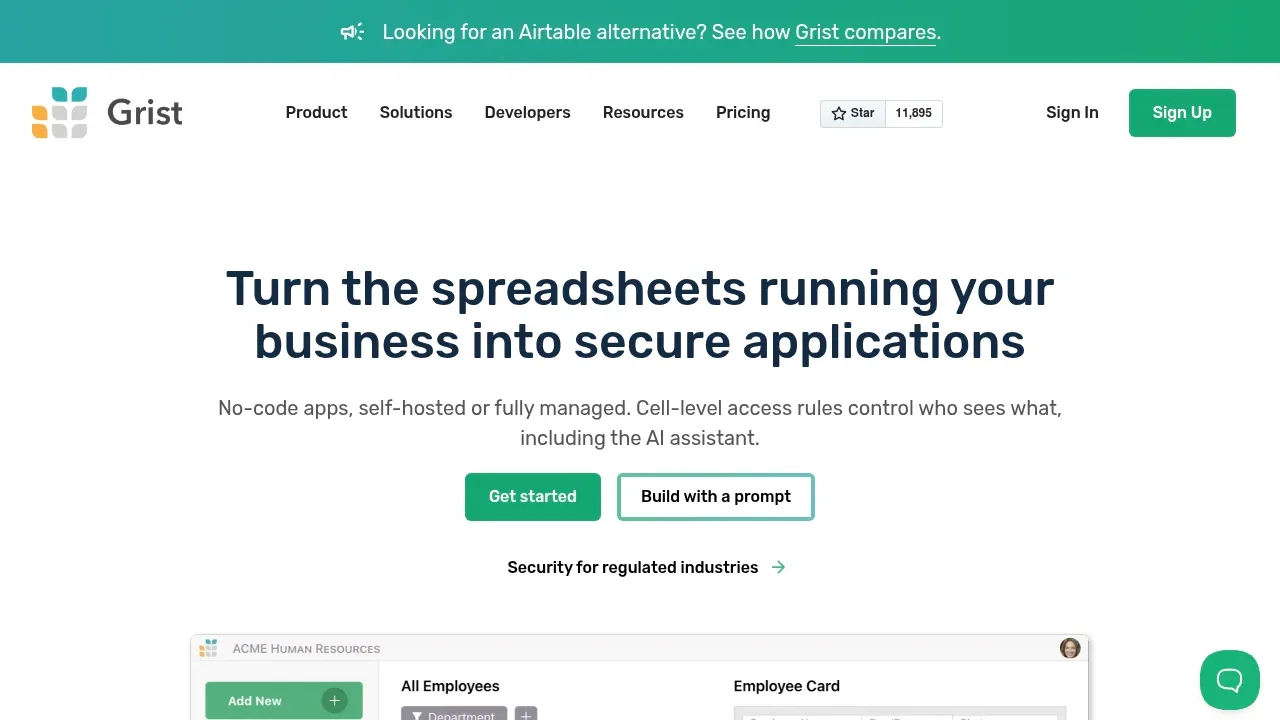
A self-hosted relational spreadsheet with Python formulas and an AI formula assistant, plus local desktop editing and managed hosting.

A local Markdown note-taking app for macOS, Windows and Linux with a vault-wide AI agent that supports Ollama and cloud providers.

An open-source AI note-taking app with local Markdown files, offline writing and optional self-hosted sync.
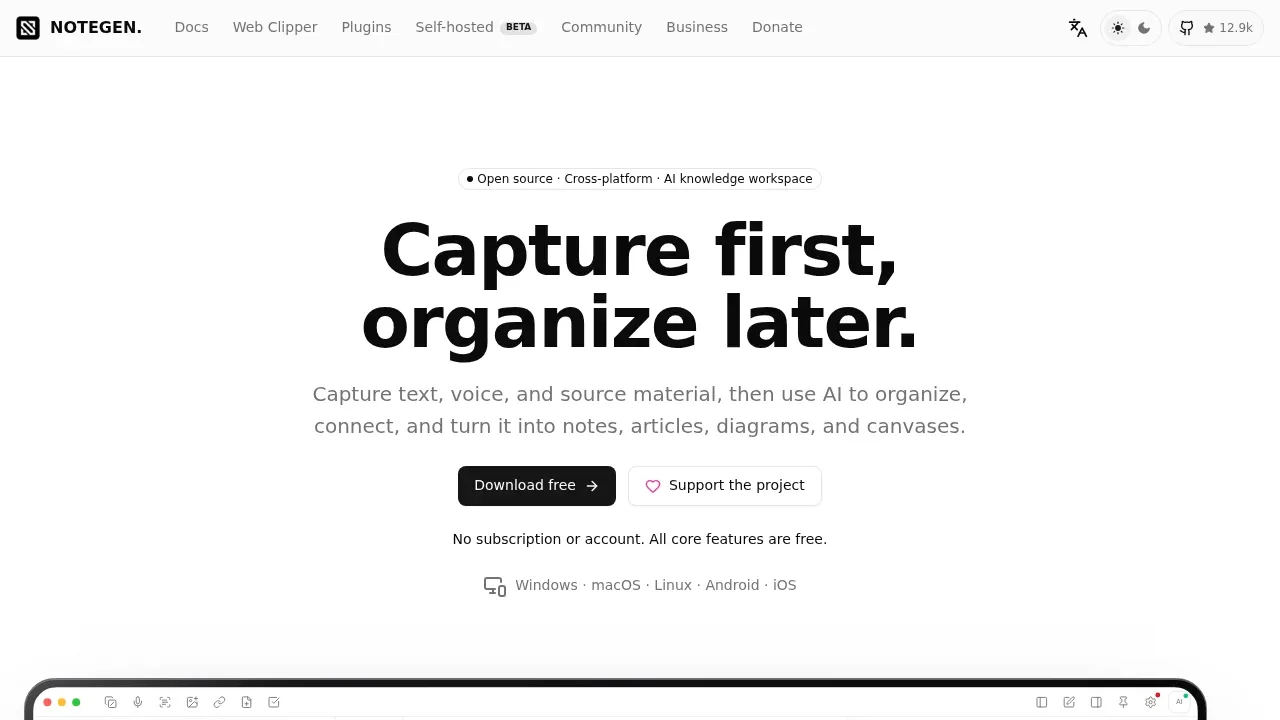

A Markdown knowledge workspace with offline editing, linked notes and Lua scripting, available as desktop apps or a self-hosted browser app.
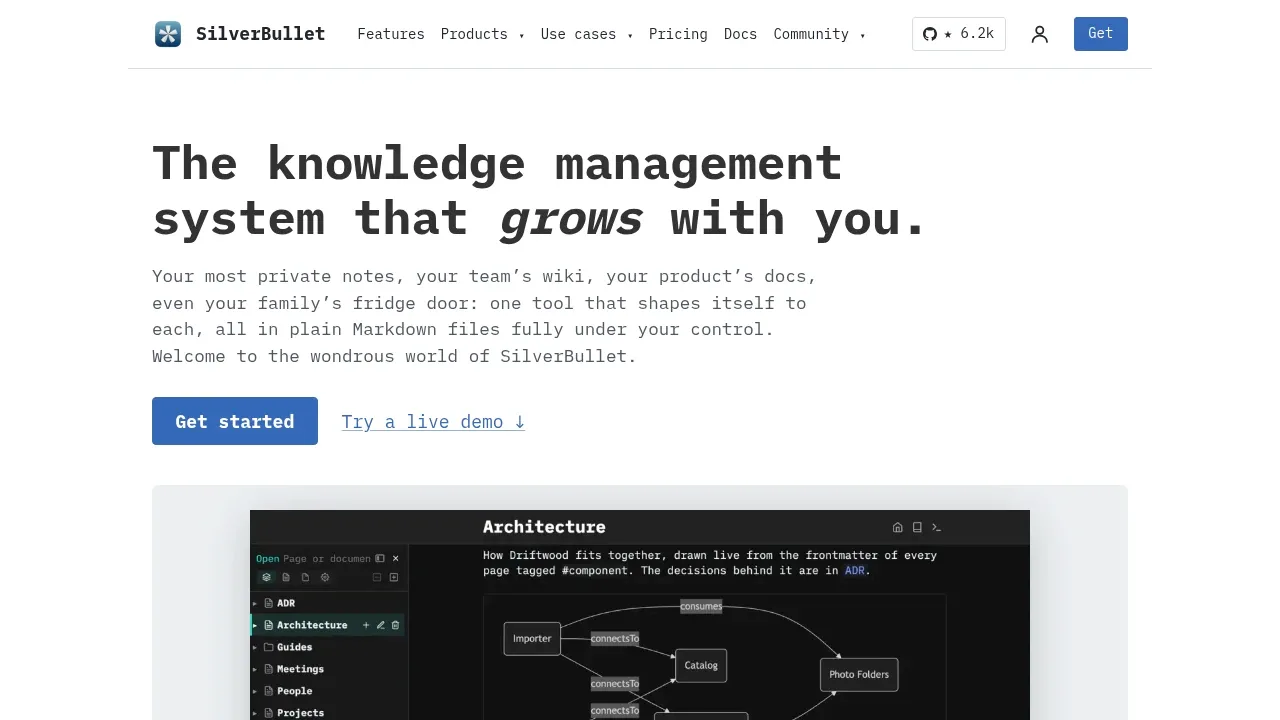

A local-first note-taking app organizes personal knowledge bases on desktop or a self-hosted server, with per-note encryption and visual maps.
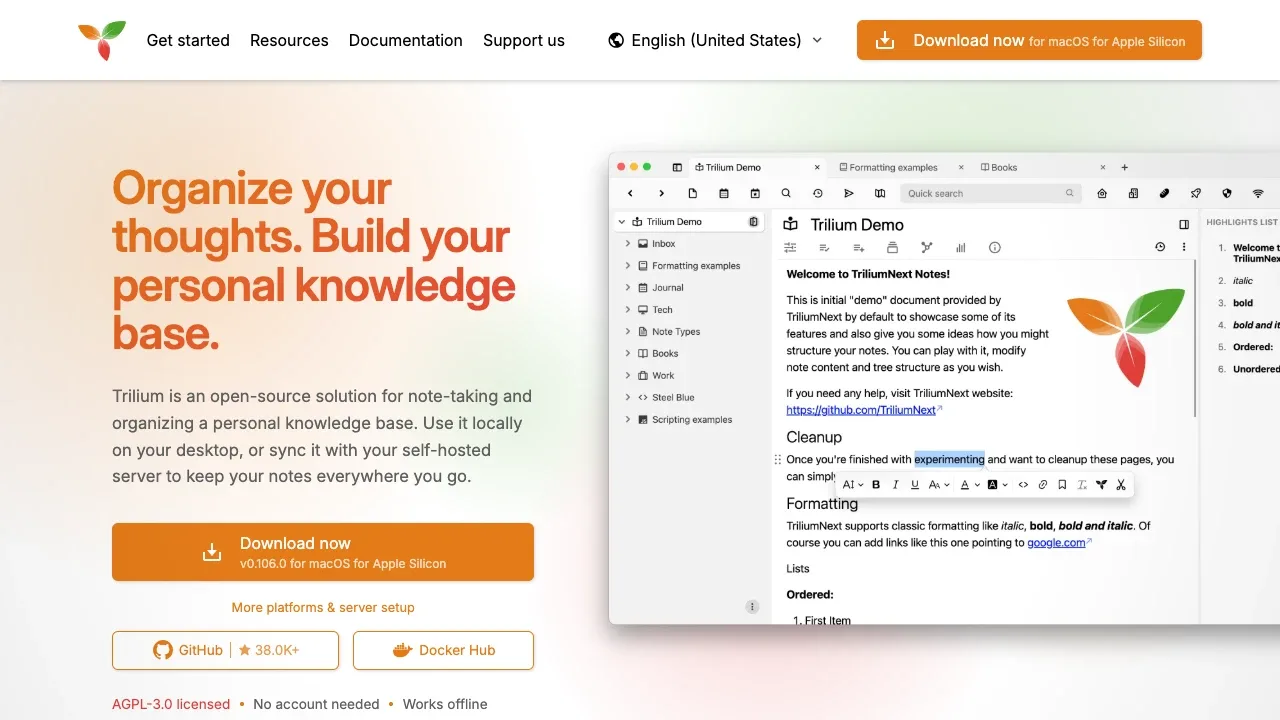

A local-first knowledge base supports note-taking, PDF annotation and task management, with Markdown and Org-mode formats under AGPL-3.0.
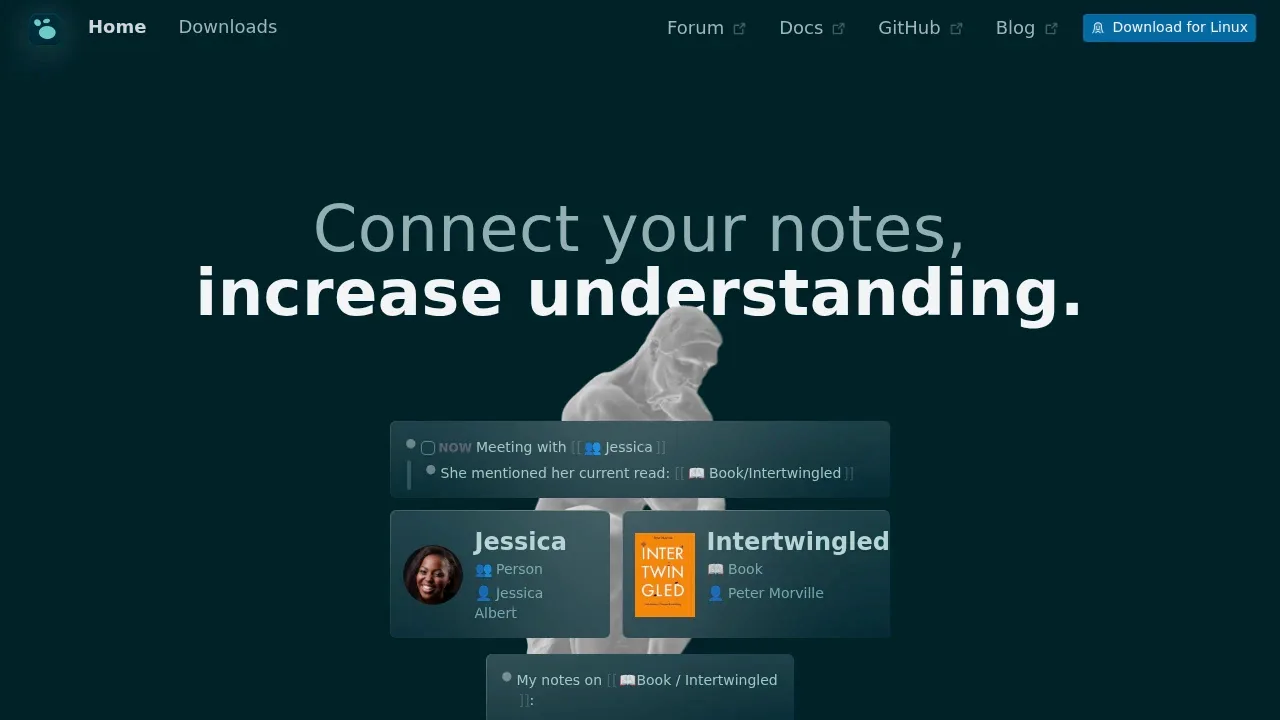

A self-hosted Markdown knowledge base with AI assistant access through MCP, offline operation and plain-file storage, free under MIT.

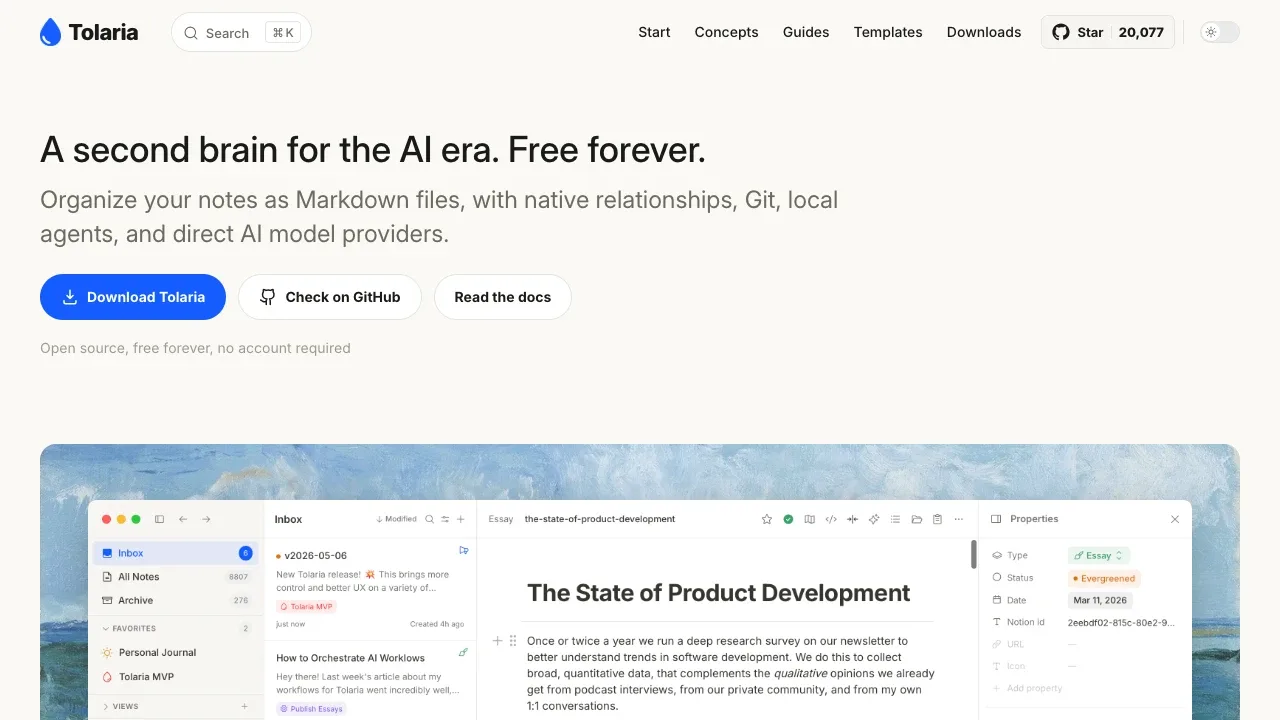
An offline Markdown knowledge base for macOS, Windows, and Linux that keeps notes in local files with Git history and supports external AI tooling.

A self-hosted AI note app stores Markdown notes in your environment and supports natural language search, with a separate hosted cloud edition.
For Notion, start with AppFlowy. Other alternatives include AFFiNE, Docmost, Hillnote and SiYuan.
Most are AI Notes and Knowledge Bases; others include Writing and Email Assistants.
People also replace
See all
Manus alternatives



Genspark alternatives



NotebookLM alternatives


